D
e
s
i
g
n
P
r
i
n
c
i
p
l
e
s
A New
Definition
A New
Definition
The Freedom Ship begins with a fundamental question: what makes a great city?
Across history, successful cities share common patterns—clarity of structure, balance of use, identity of place, and the ability to adapt over time. These principles guide the Freedom Ship’s physical design.
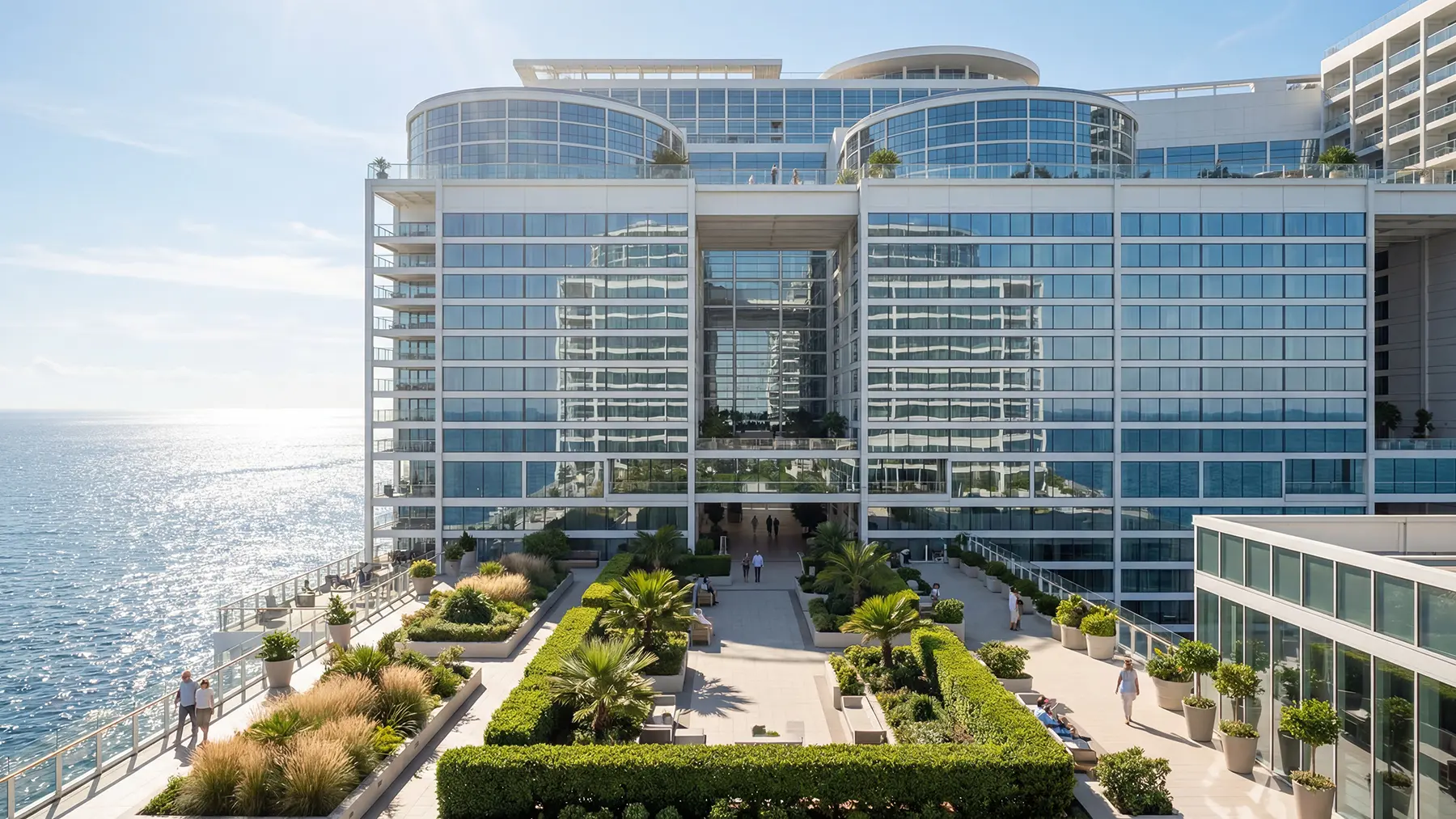
The project is not conceived as a vessel expanded to city size. It is conceived as a city placed upon a maritime platform. Urban logic governs the architecture from the outset, ensuring that scale, proportion, and organization reflect the needs of permanent residents rather than temporary visitors.
Three Disciplines Shape
The Design Framework
Three Disciplines Shape
The Design Framework
Master Planning and Urban Design
Maritime and Shipbuilding Engineering
Architecture and Interior Design
Urban planning establishes spatial order and neighborhood structure. Maritime engineering defines balance, stability, and performance at sea. Architecture expresses identity and human scale within these parameters. Together, they ensure coherence across the entire platform.
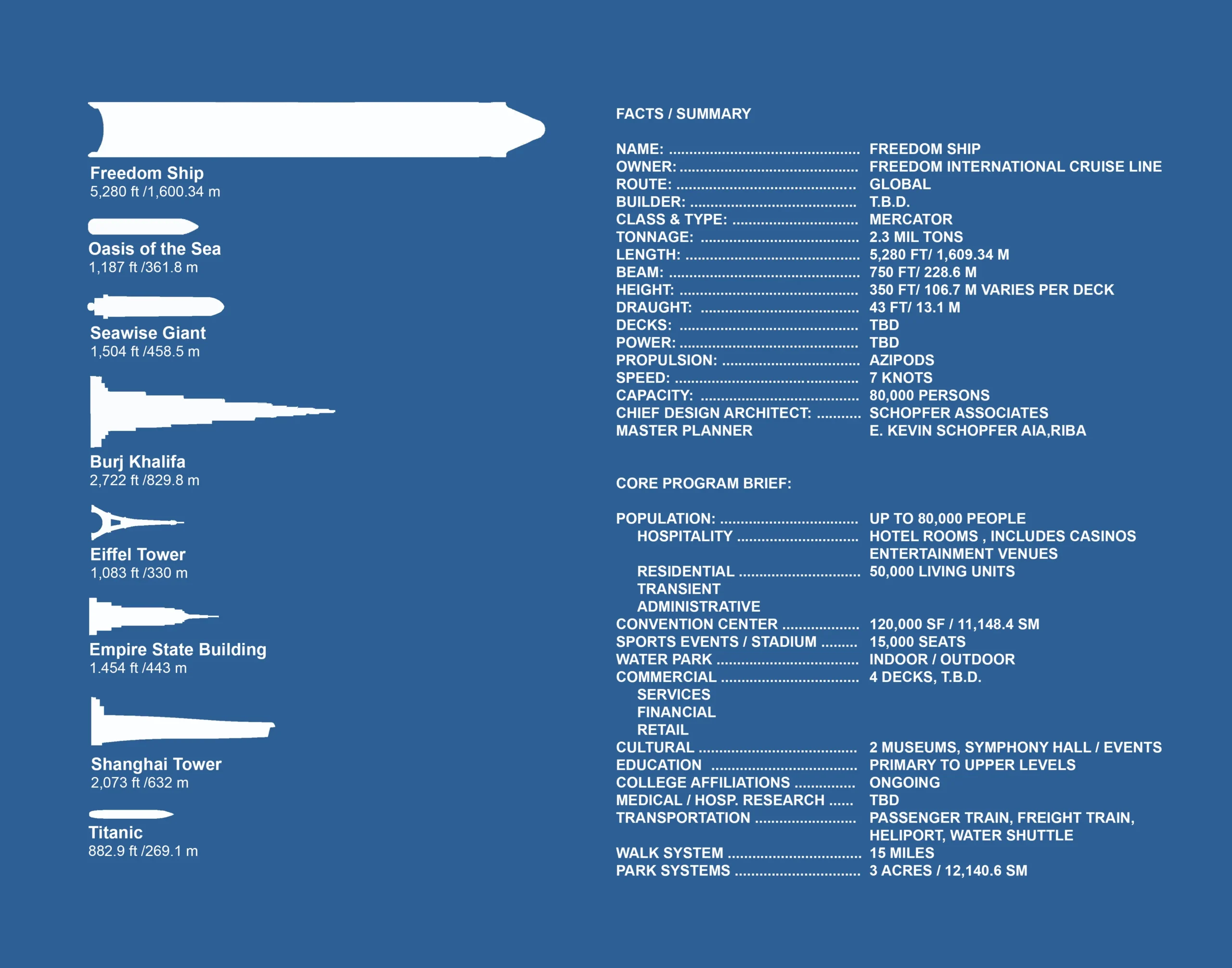
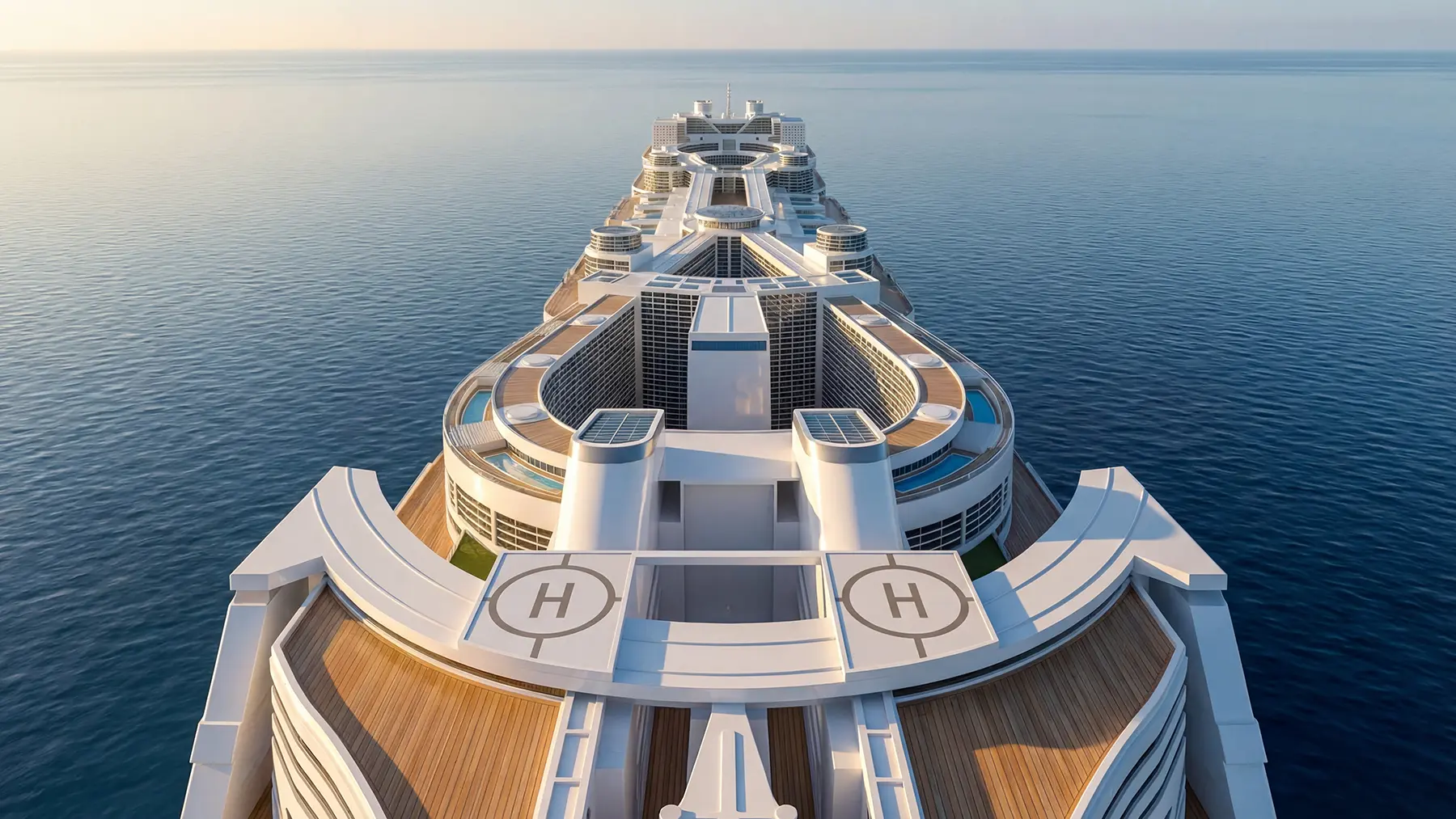
The working platform—approximately one mile (1.6 km) in length and 750 feet (228 meters) in width—creates both opportunity and constraint. At this scale, balance is structural. Program distribution, density, and massing must operate as a unified system to maintain stability while preserving clarity of use.
Form Follows
Discipline
Form Follows
Discipline
Scale supports permanence.
Structure supports safety.
Layout supports community.
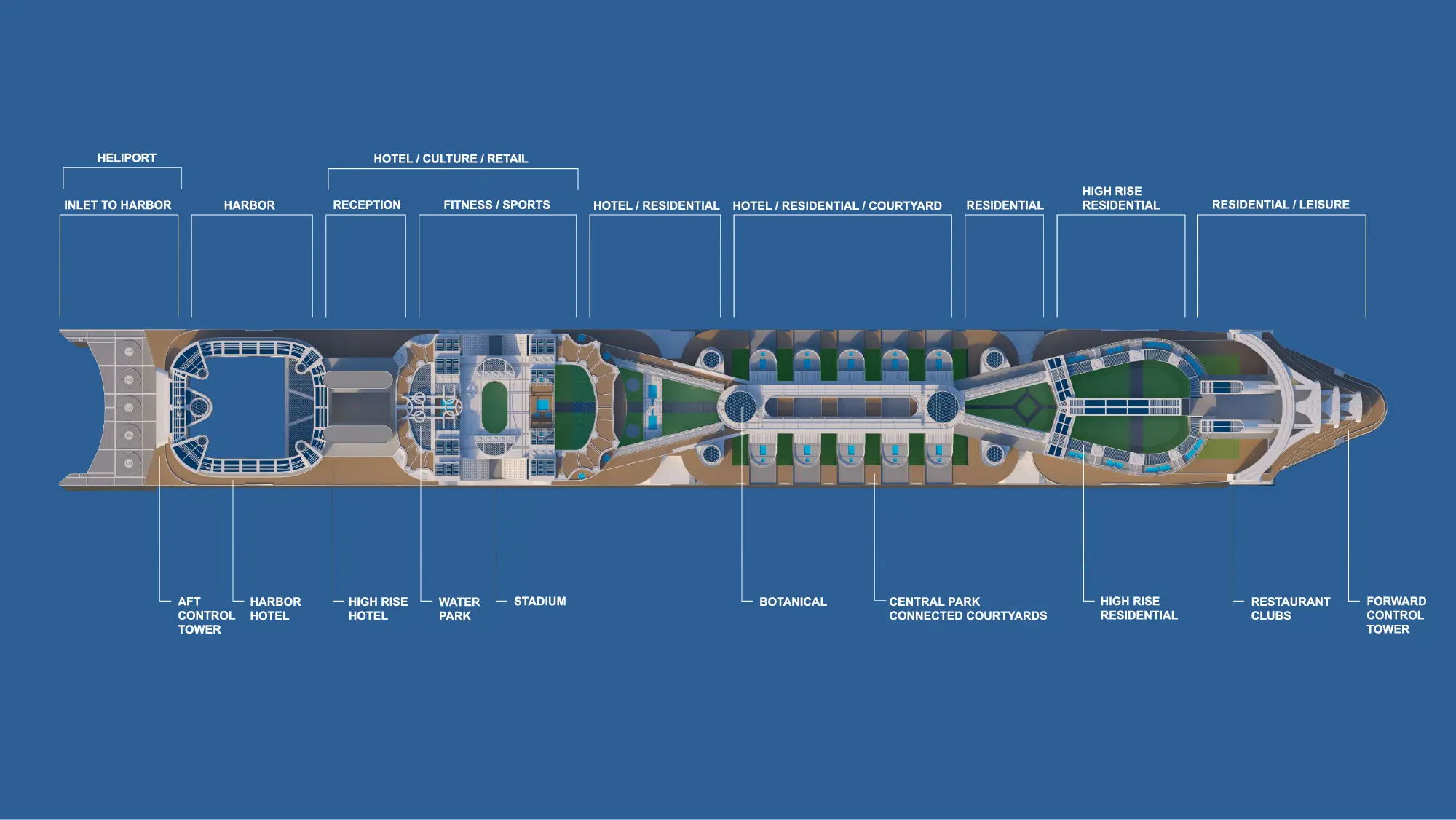
A centralized bilateral spine organizes the city from stern to bow. Districts extend laterally toward port and starboard, establishing orientation and symmetry across all decks. This structure allows the city to remain legible and navigable despite its magnitude.
The platform is intentionally not monolithic. Differentiated zones and layered systems prevent it from reading as a single continuous block. Infrastructure and maritime systems operate within a disciplined framework beneath and alongside civic and residential environments, allowing daily life to remain calm and predictable.
Enduring Principles
New Context
Enduring Principles
New Context
The Freedom Ship seeks uniqueness not through theatrical expression, but through the careful application of enduring urban principles to a new context. Its design is grounded, balanced, and structured to endure over time.