D
e
s
i
g
n
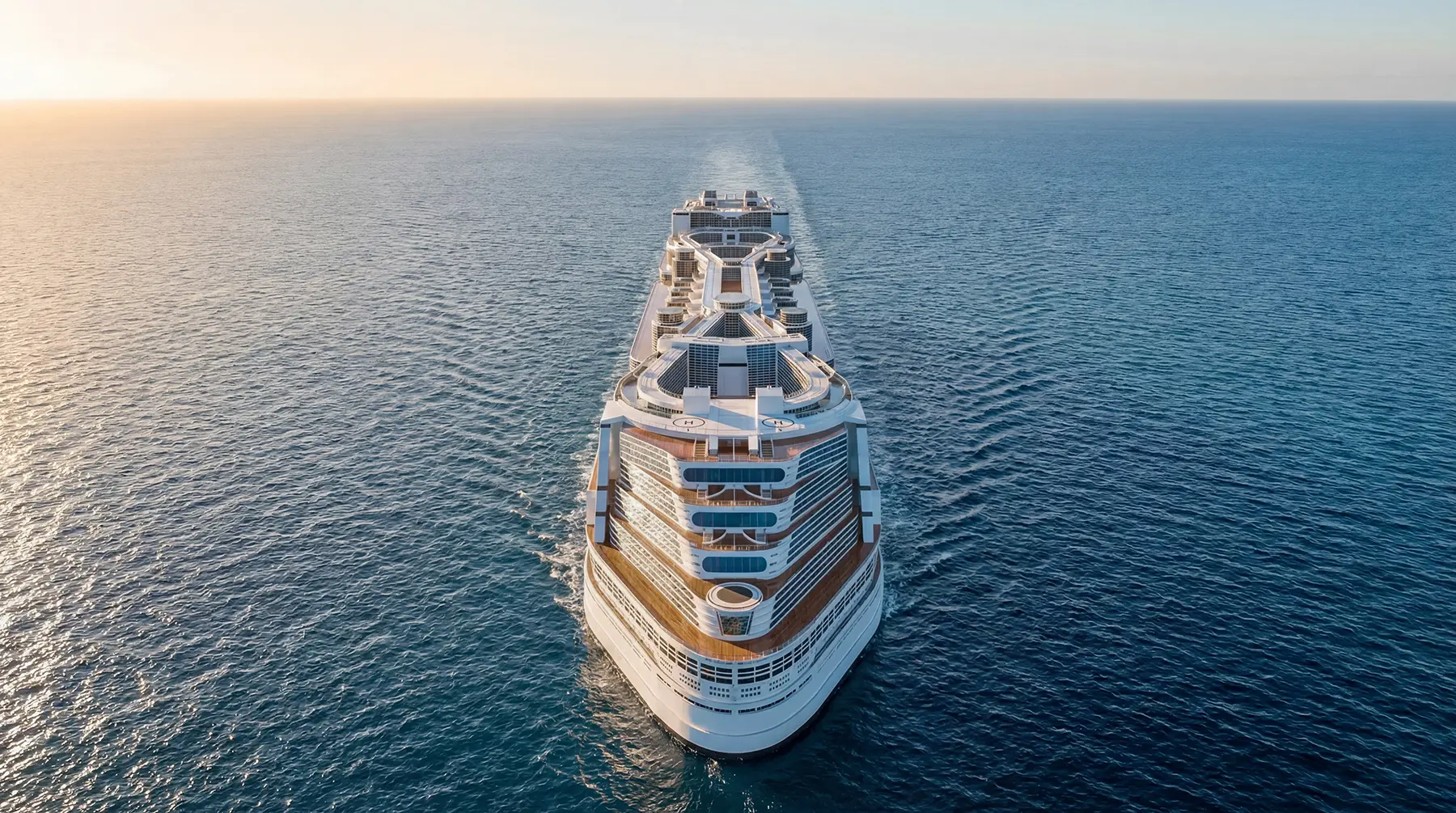
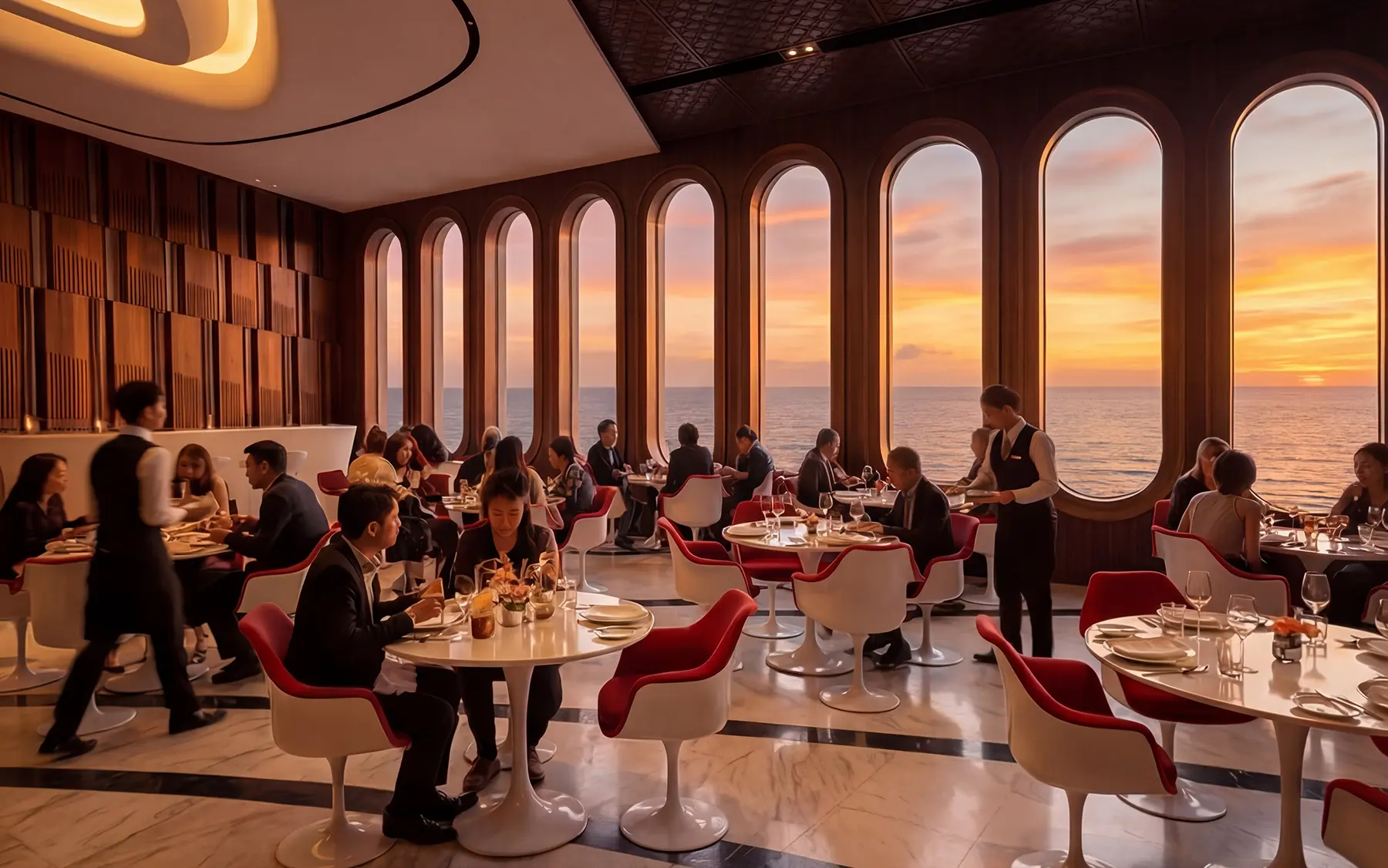
Life aboard the Freedom Ship is envisioned as daily urban life—reimagined within a permanently mobile setting. The project is designed for long-term inhabitants rather than short-term visitors, with the structures, services, and rhythms of a real city rather than a temporary destination.
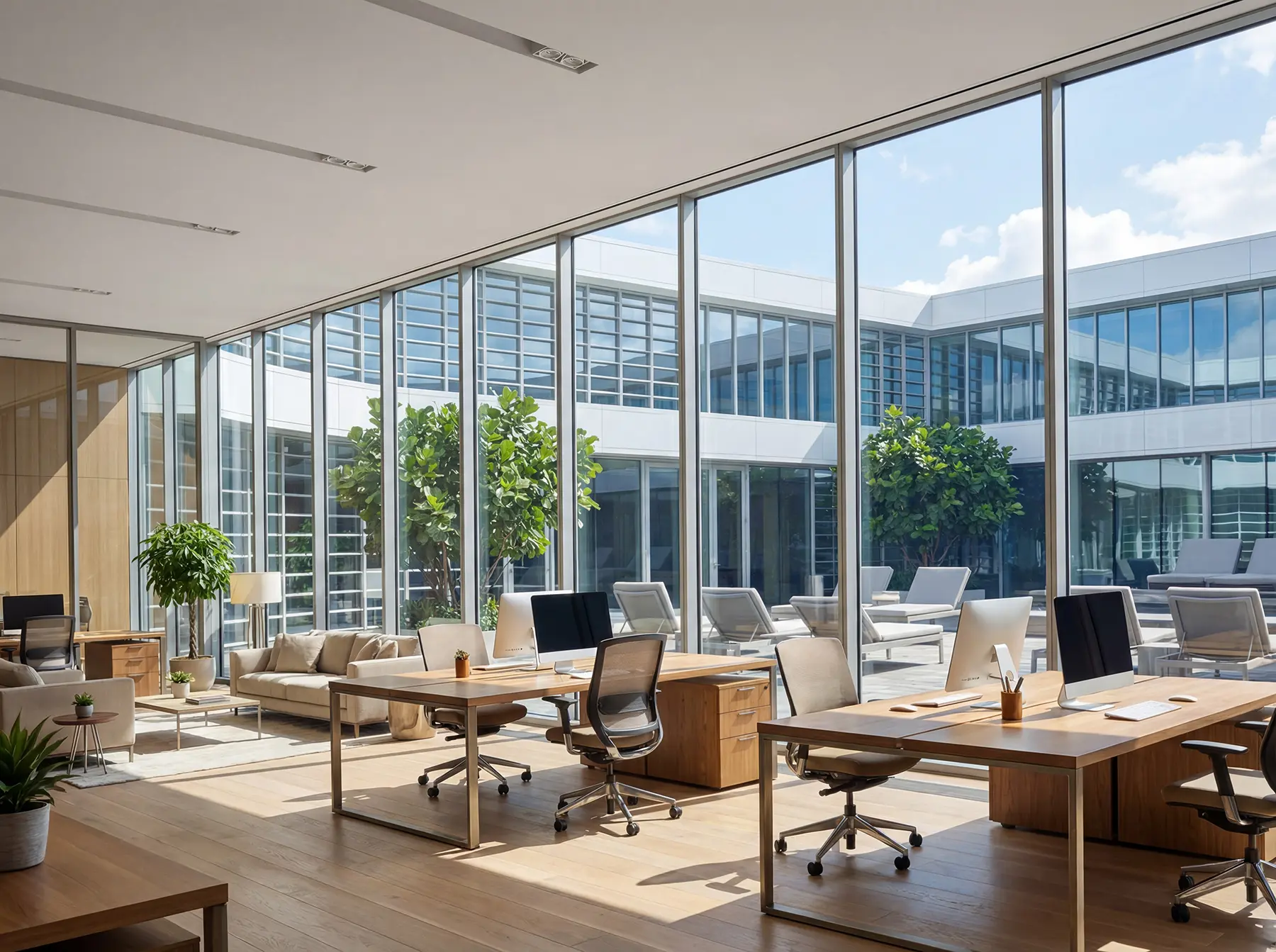
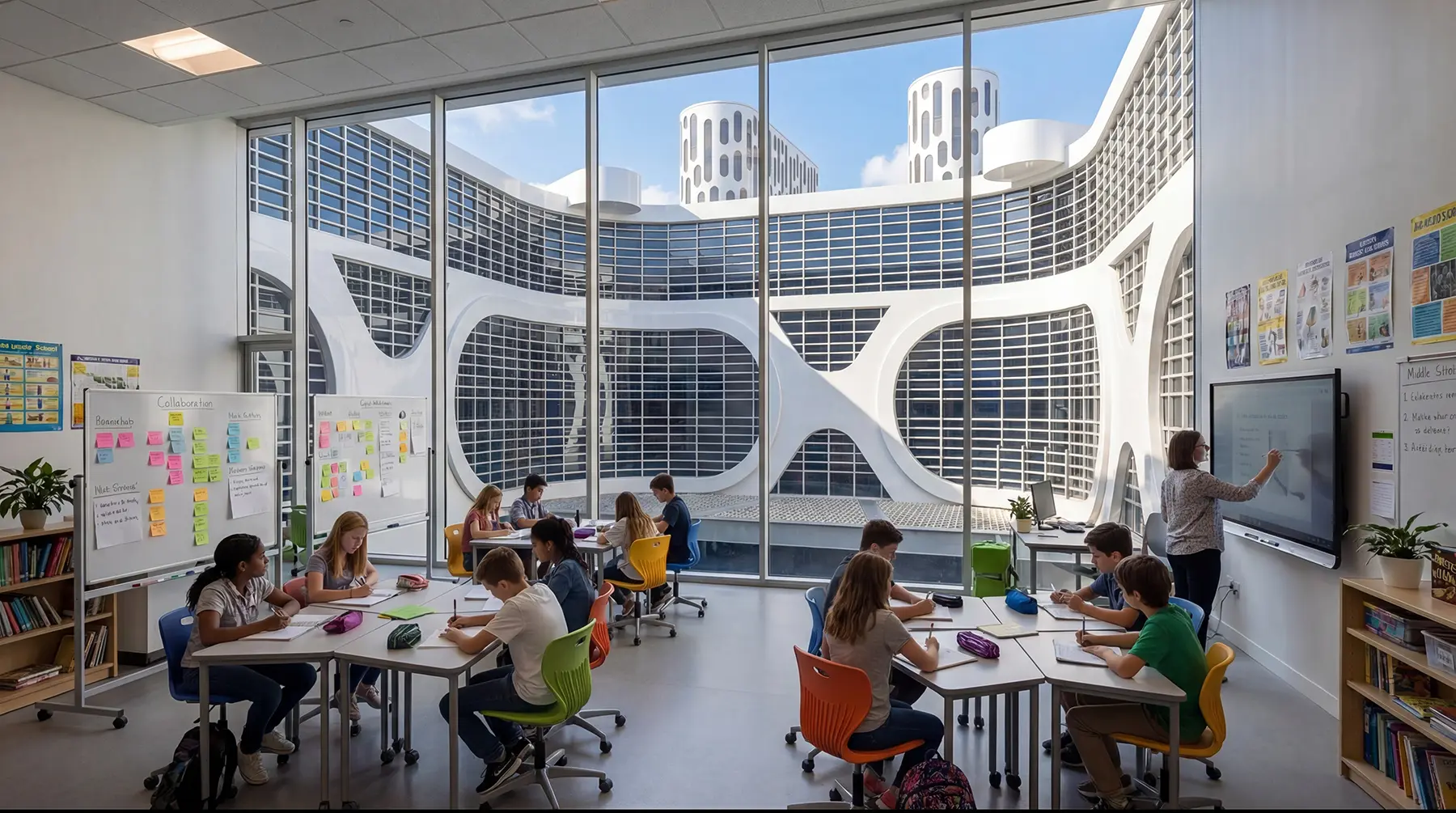
Residents live in permanent homes, work in offices and shared environments, and participate in community life much as they would in a land-based city. Education, healthcare, commerce, and public spaces are integrated into the platform to support everyday needs over time. The intent is continuity: a place where people establish routines, relationships, and a lasting sense of belonging.
What makes a great city? There is no shortage of studies, theories, and common-sense views on the subject. What is clear is that cities seek a commonality of insight combined with a sense of place and location. The approach to Freedom Ship is a disciplined format embracing that shared wisdom and seeking to enliven it with today’s and tomorrows’ innovation. Within this understanding is that all cities seek uniqueness. Freedom Ship is a floating city which will journey around the world.
The following represents our design efforts to date. As the process continues, these efforts will evolve with ongoing program and necessary refinements.
Program
FCLI has gathered years of research and general working knowledge of cruise ship marketing and tourist growth areas. Based upon these insights all parties are comfortable that this evolved program is comprehensive and market worthy. The outline of the design process is based upon three core areas of discipline. They are: one, Master Plan/Urban Design, secondly, Maritime/Shipbuilding, and third, Architecture/Interior Design.
Maritime Shipbuilding
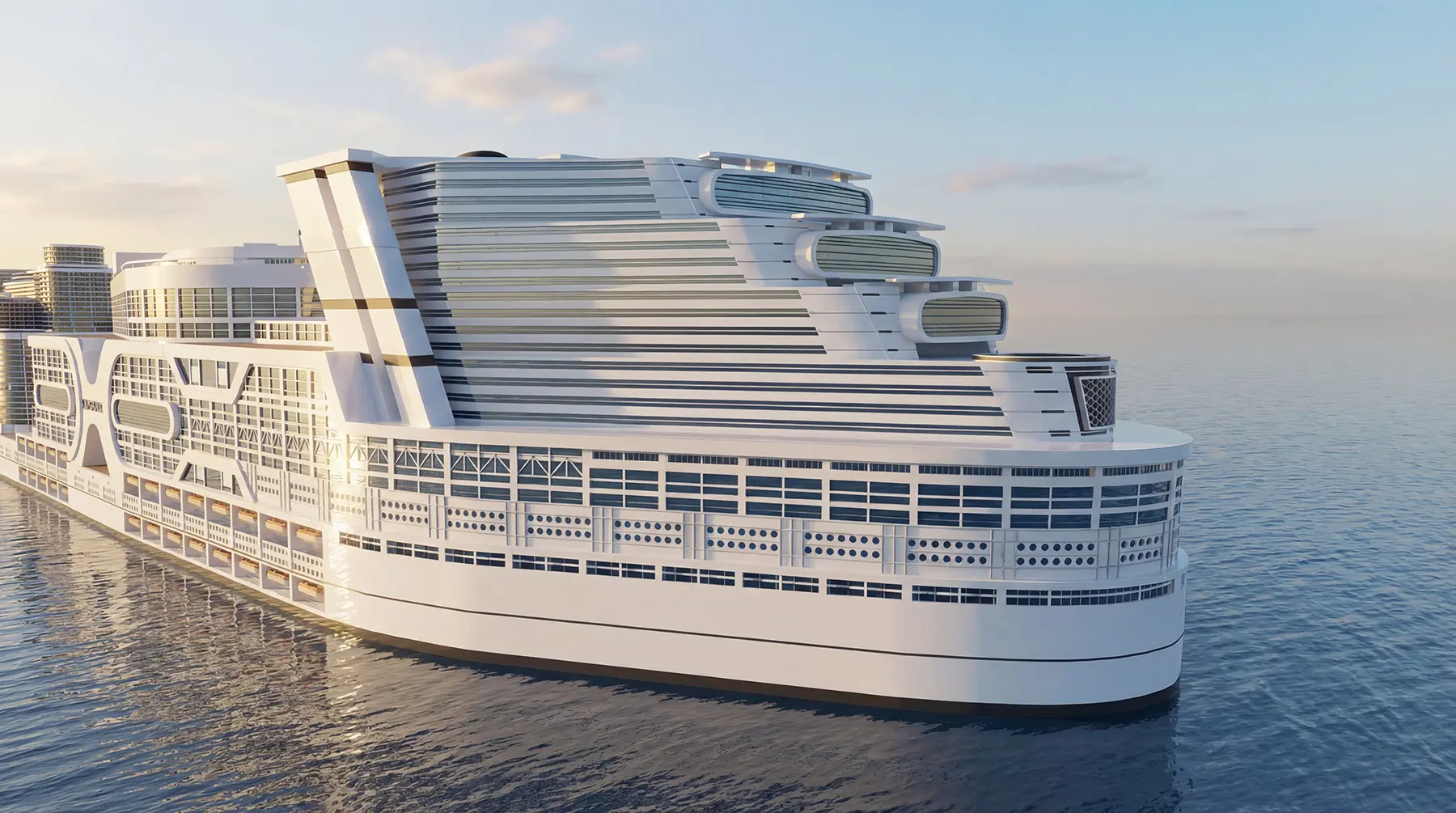
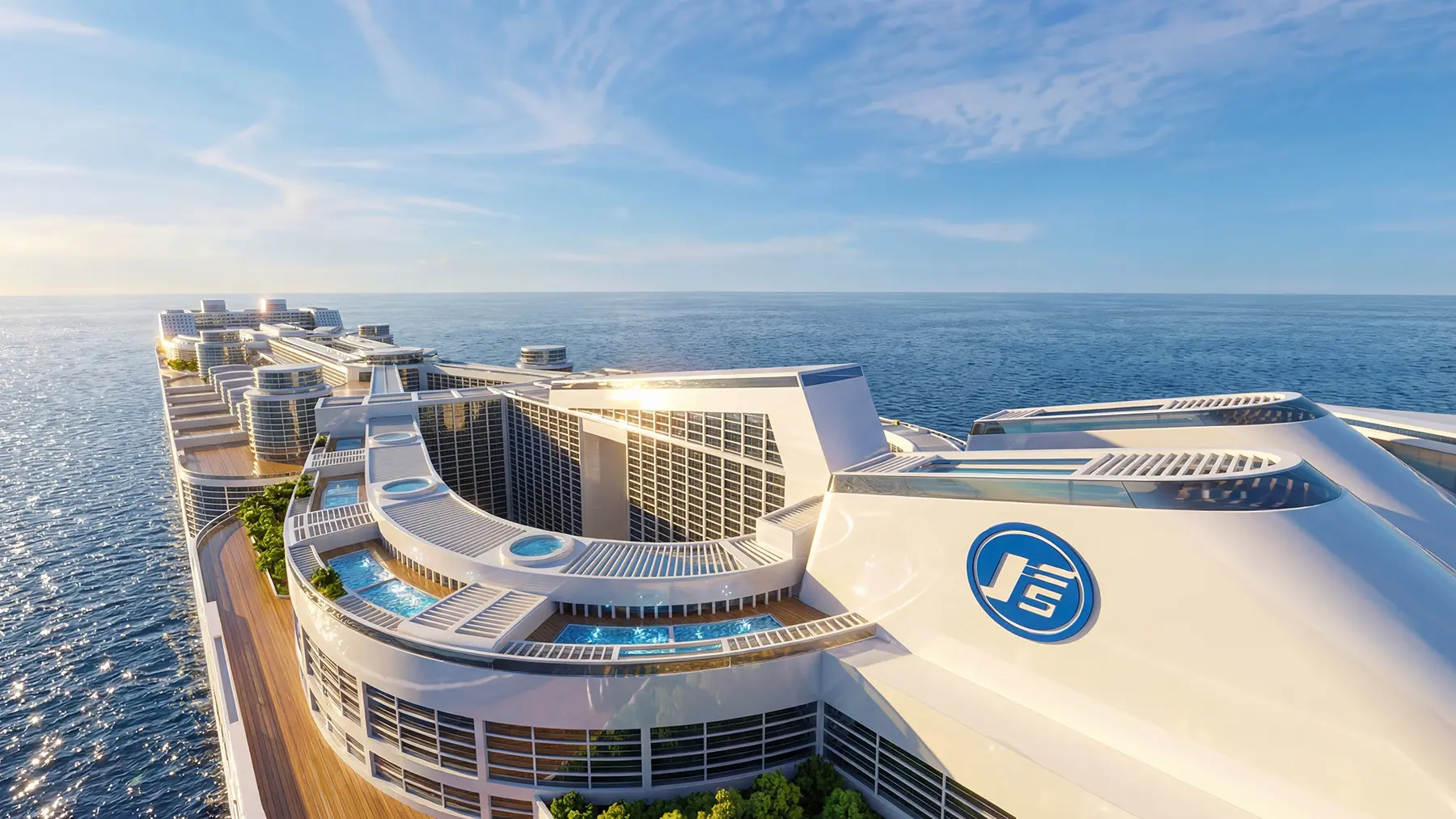
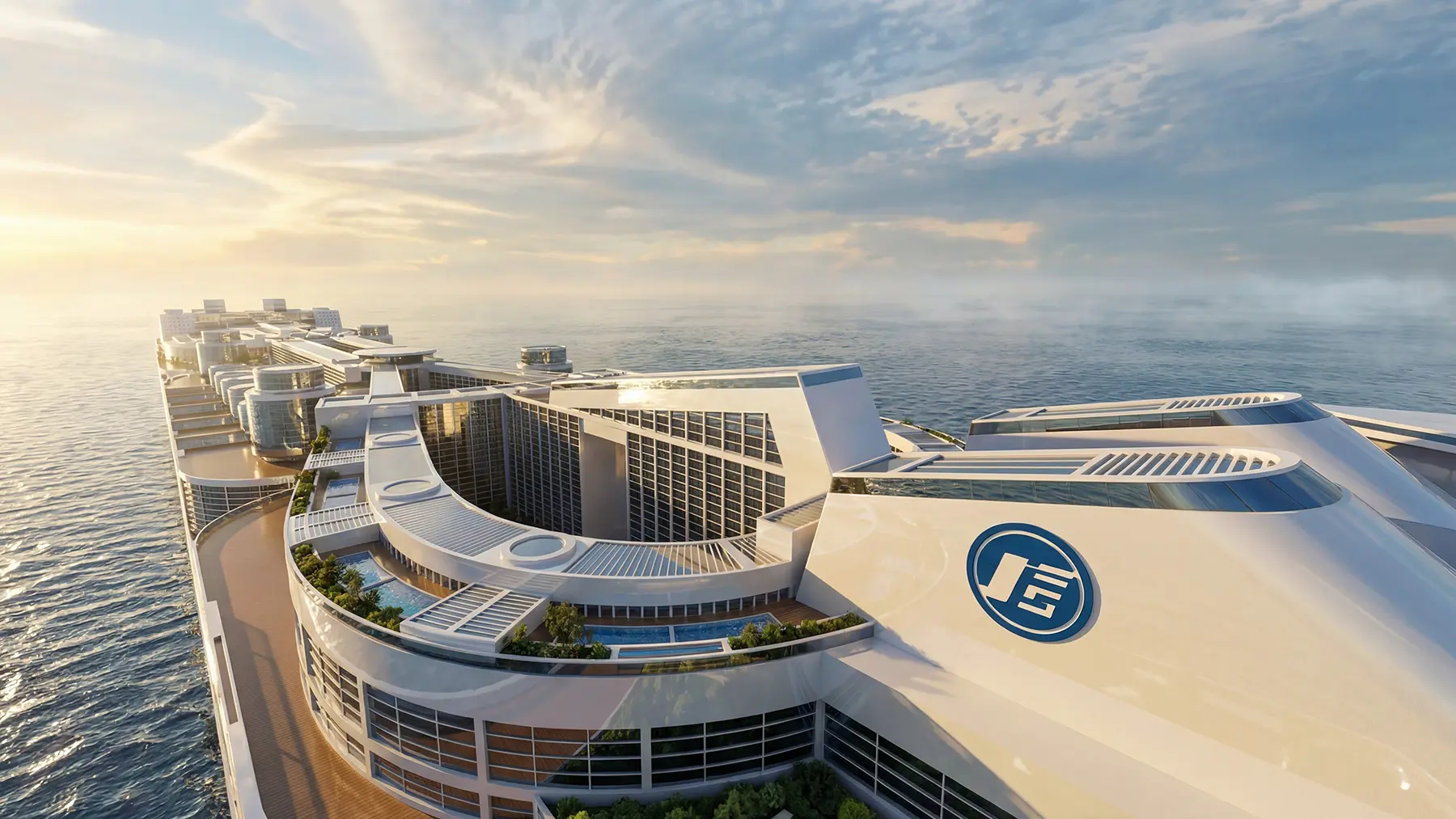
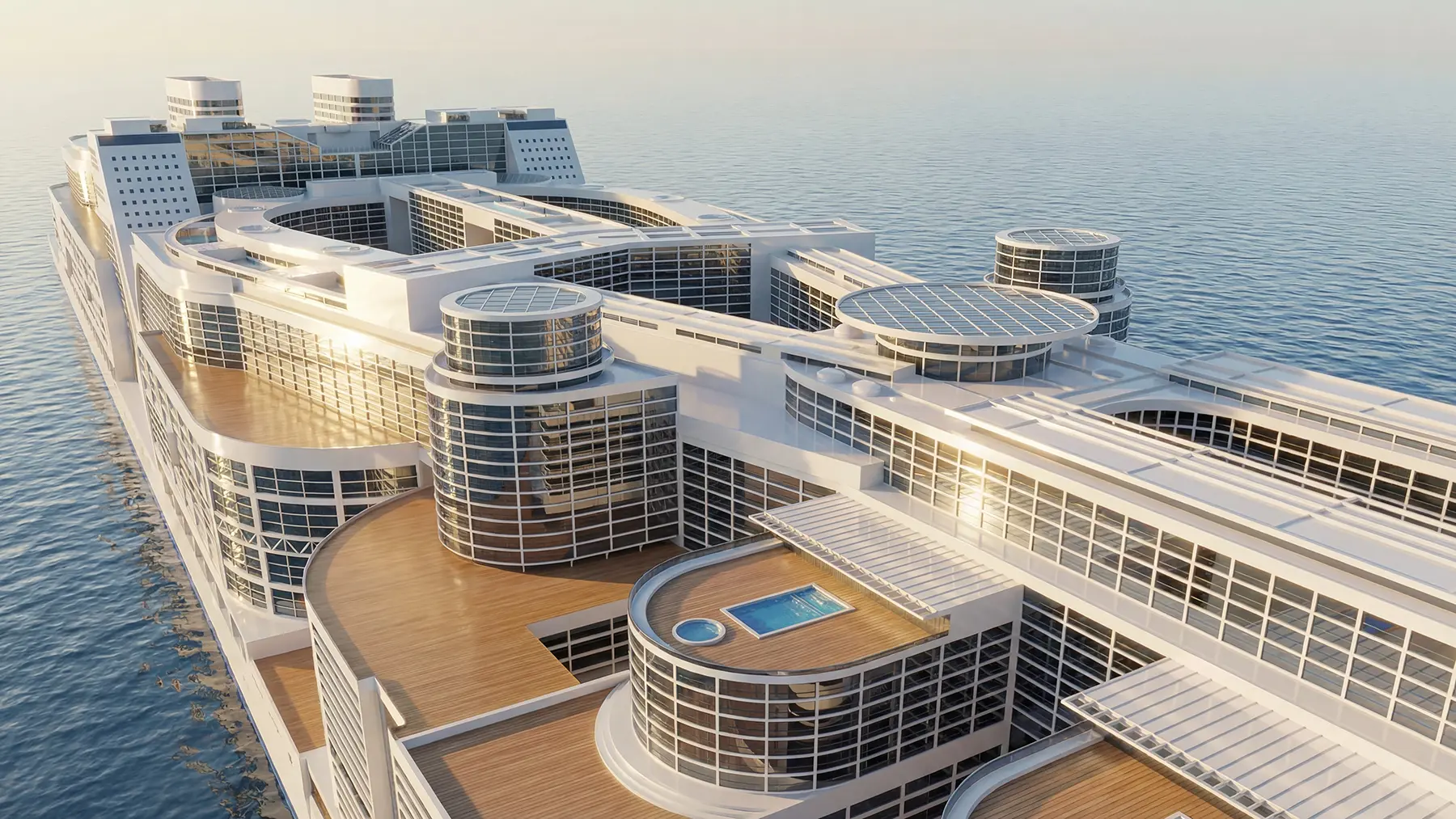
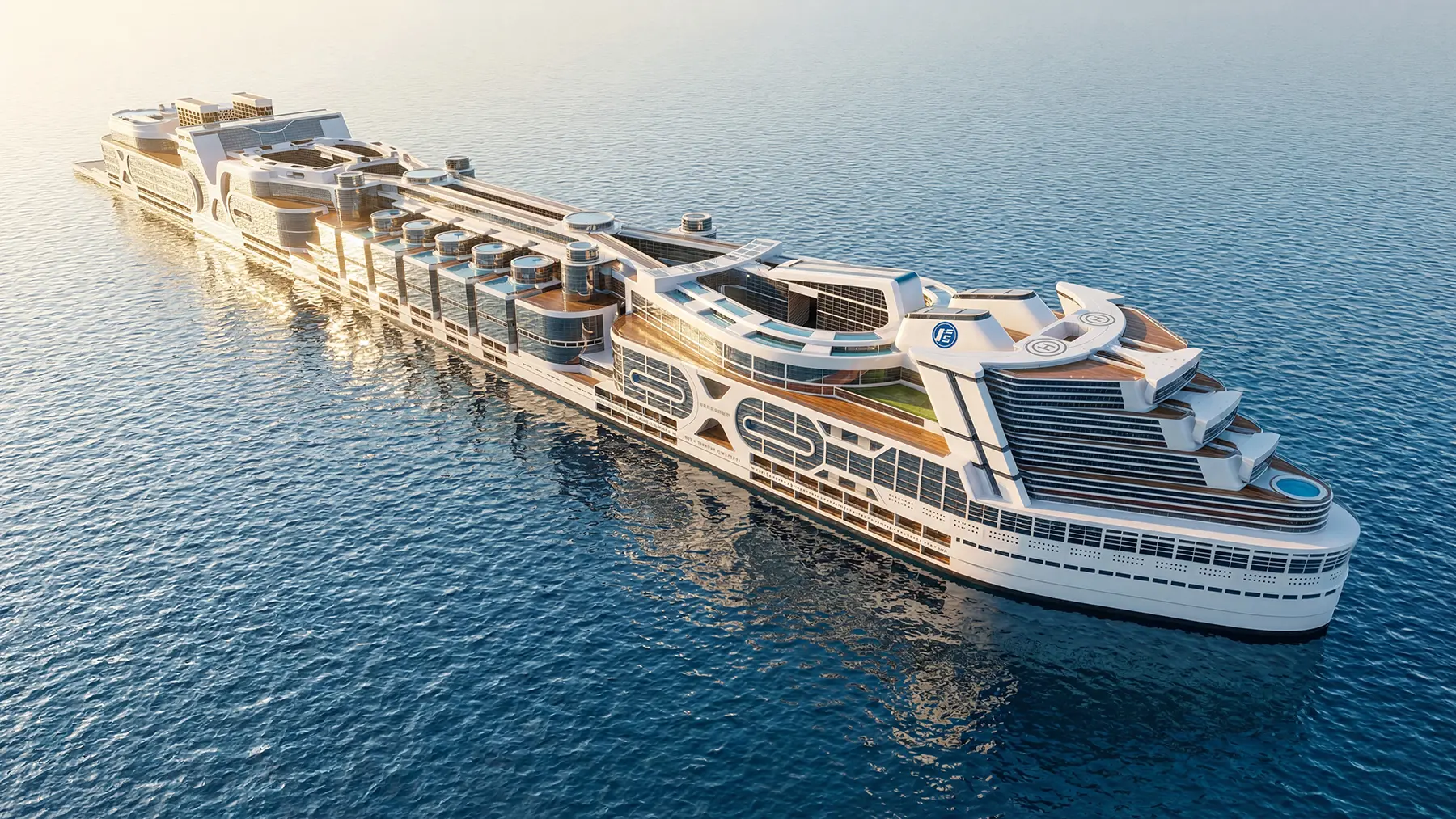
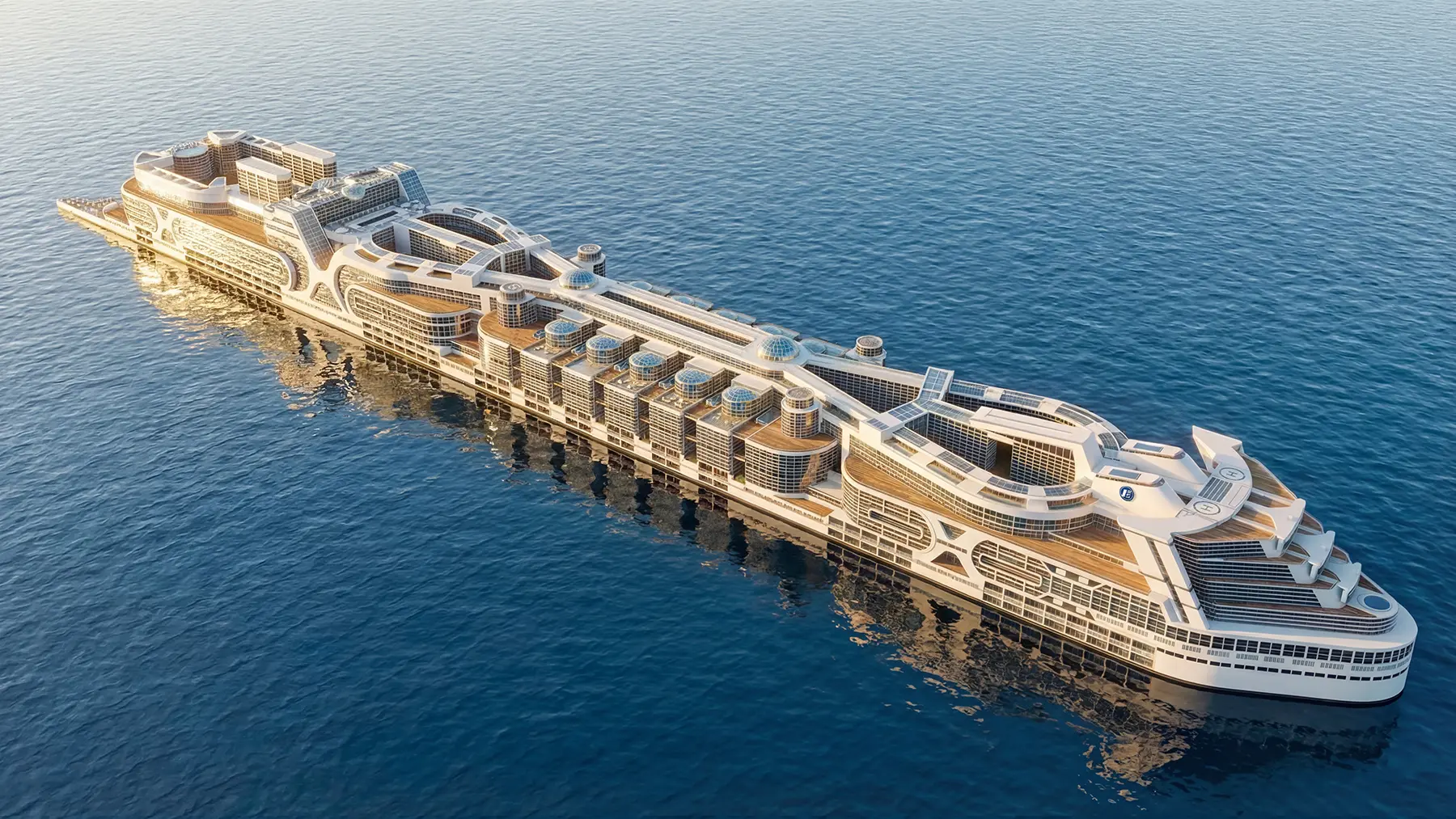
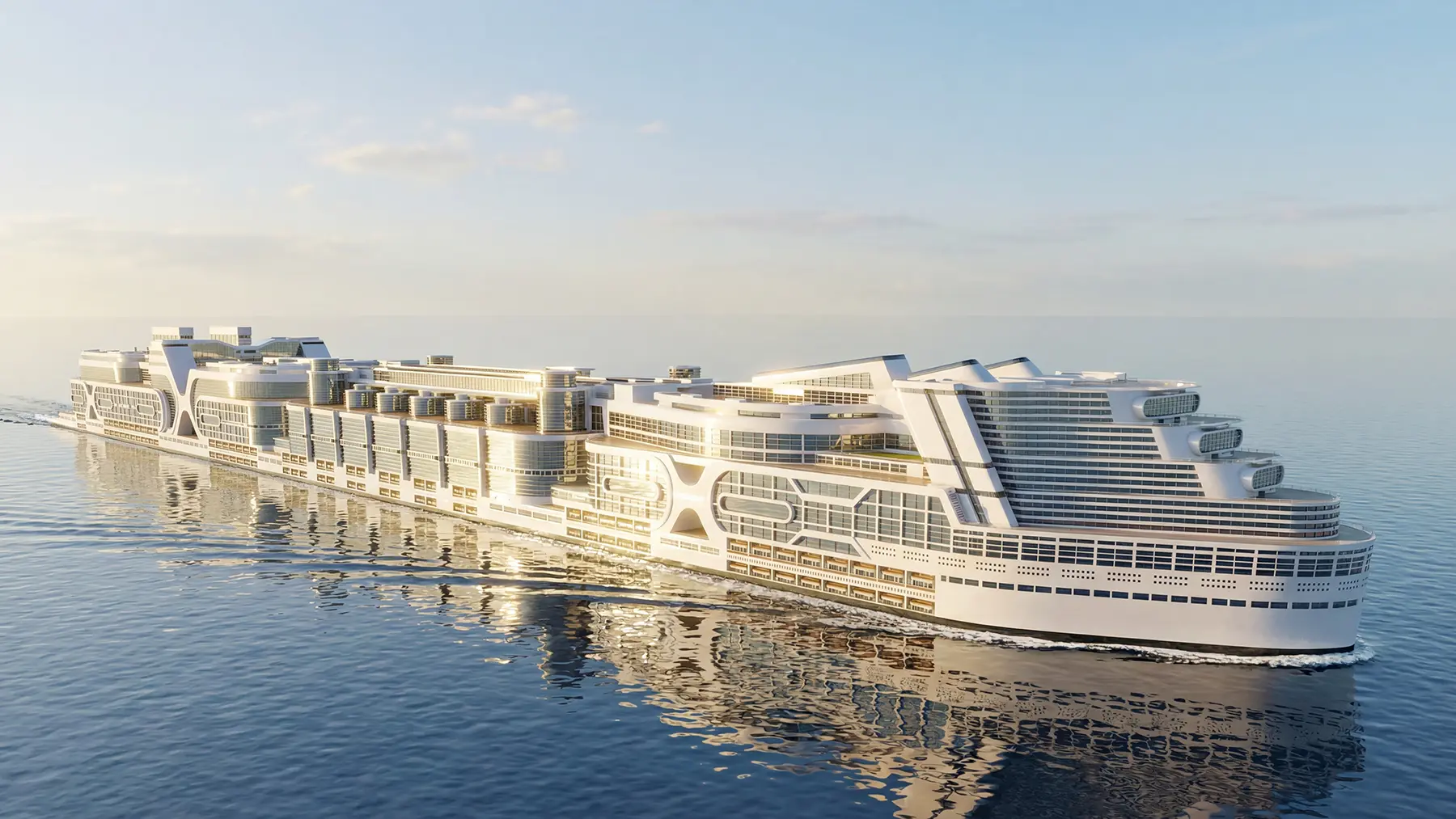
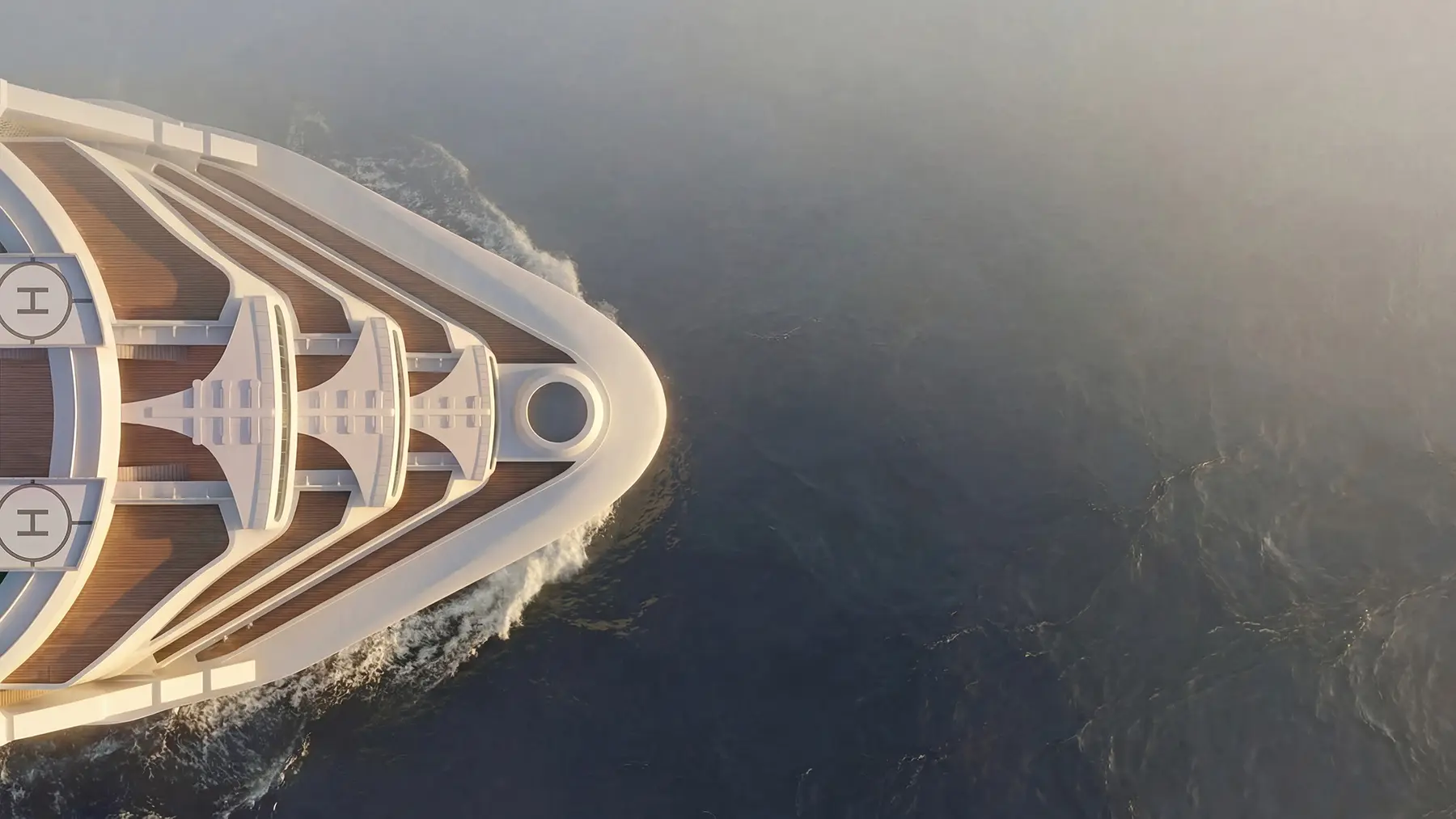
Freedom Ship is based upon a single unified hull consisting of multiple modular “cells”. This simple platform sets dimensional and massing parameters for overall constraints and balance. Due to the breath of ships’ size, Freedom Ship will be constructed at sea in a controlled location. Components of the ship, including the hull and platform superstructure, will be built in multiple drydocks. These components will then be floated to the primary construction site for final assembly. All drydock built components will be conveyed as modular units. By necessity, the city build becomes more focused and density driven. In addition, calculated massing/distribution determine limits of loading and placement. Platform size: 750 ft wide, 228.6 m, 5280 ft length, 1609.34 m.
Master Plan/Urban Design
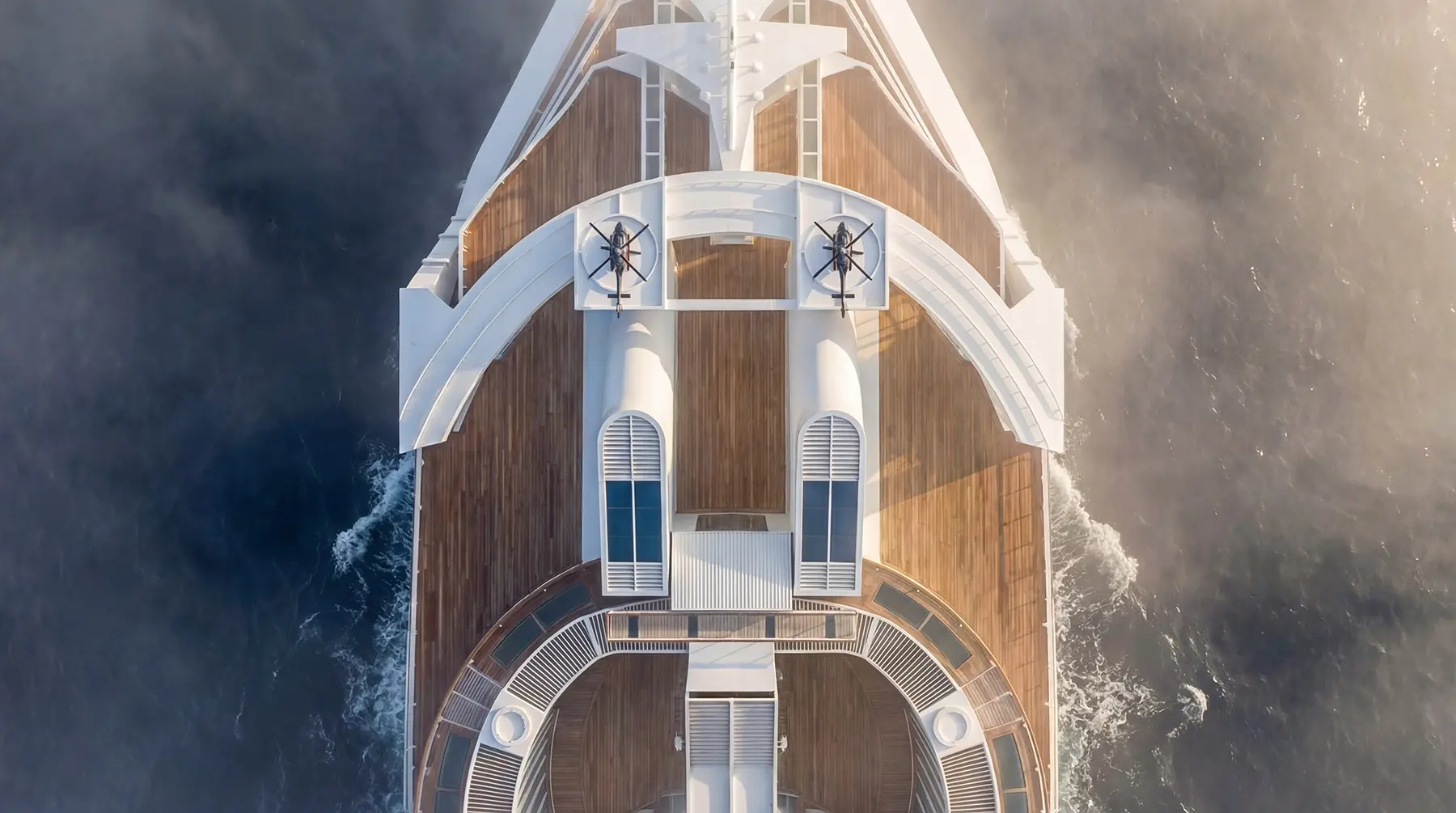
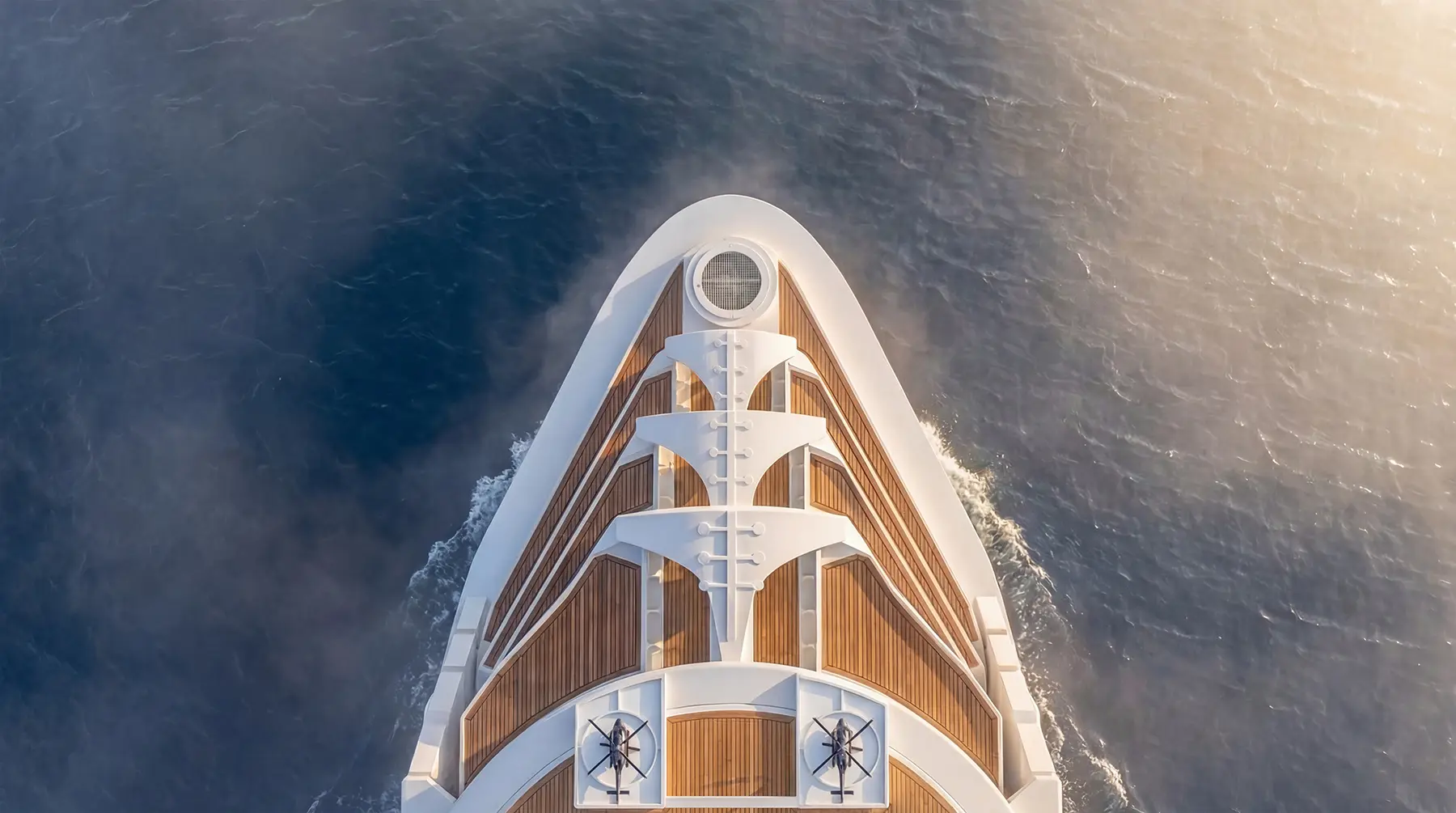
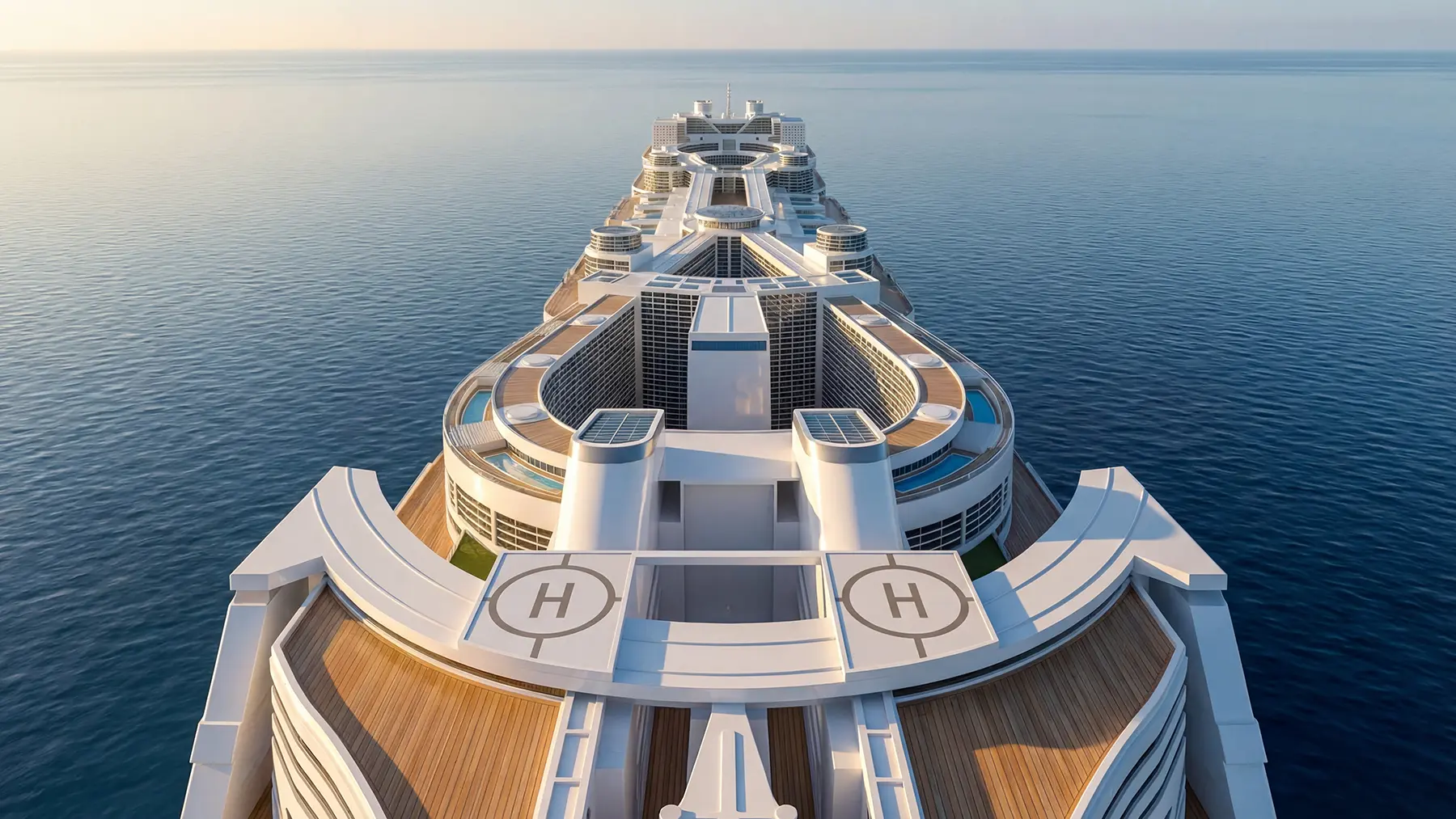
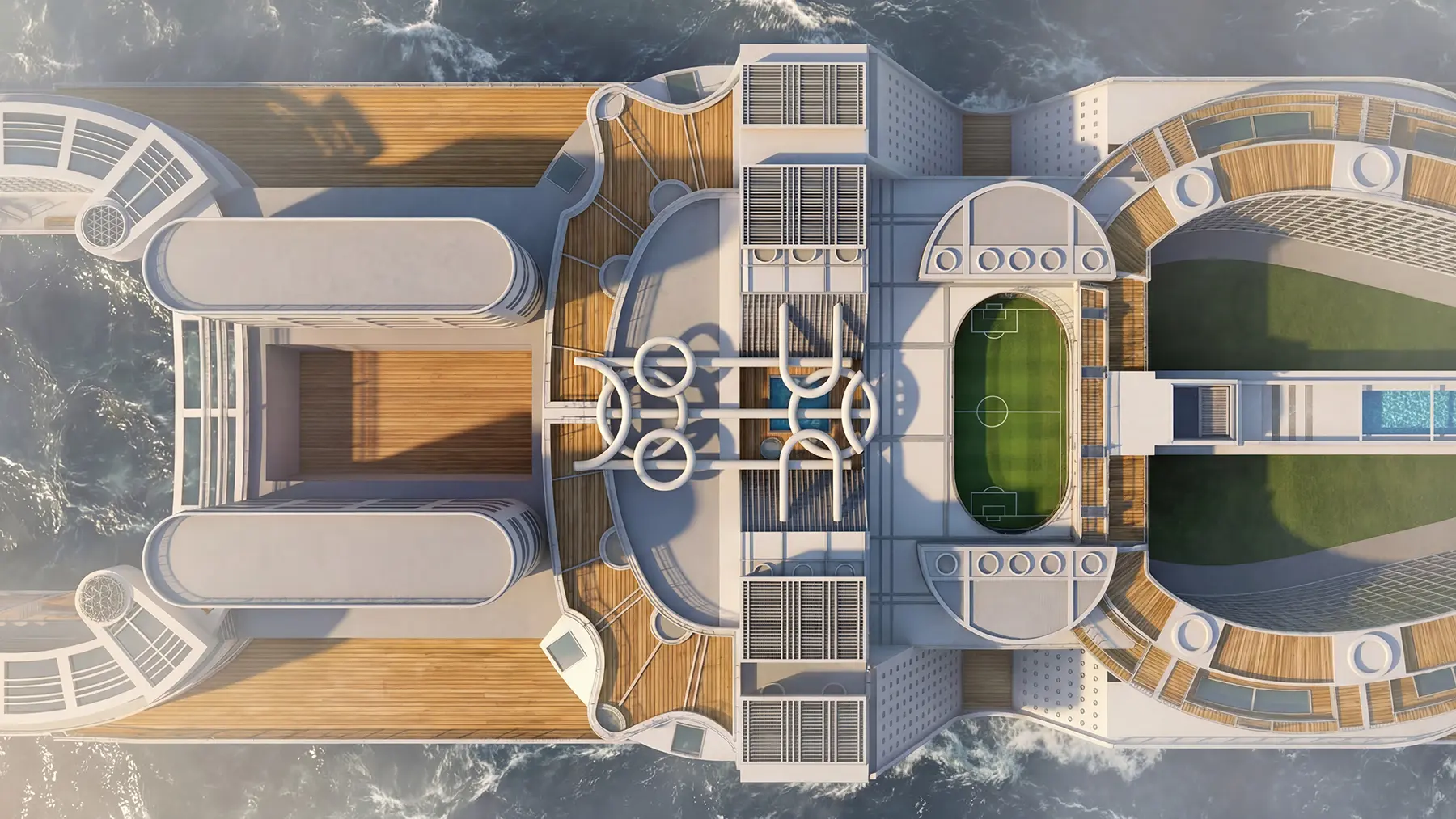
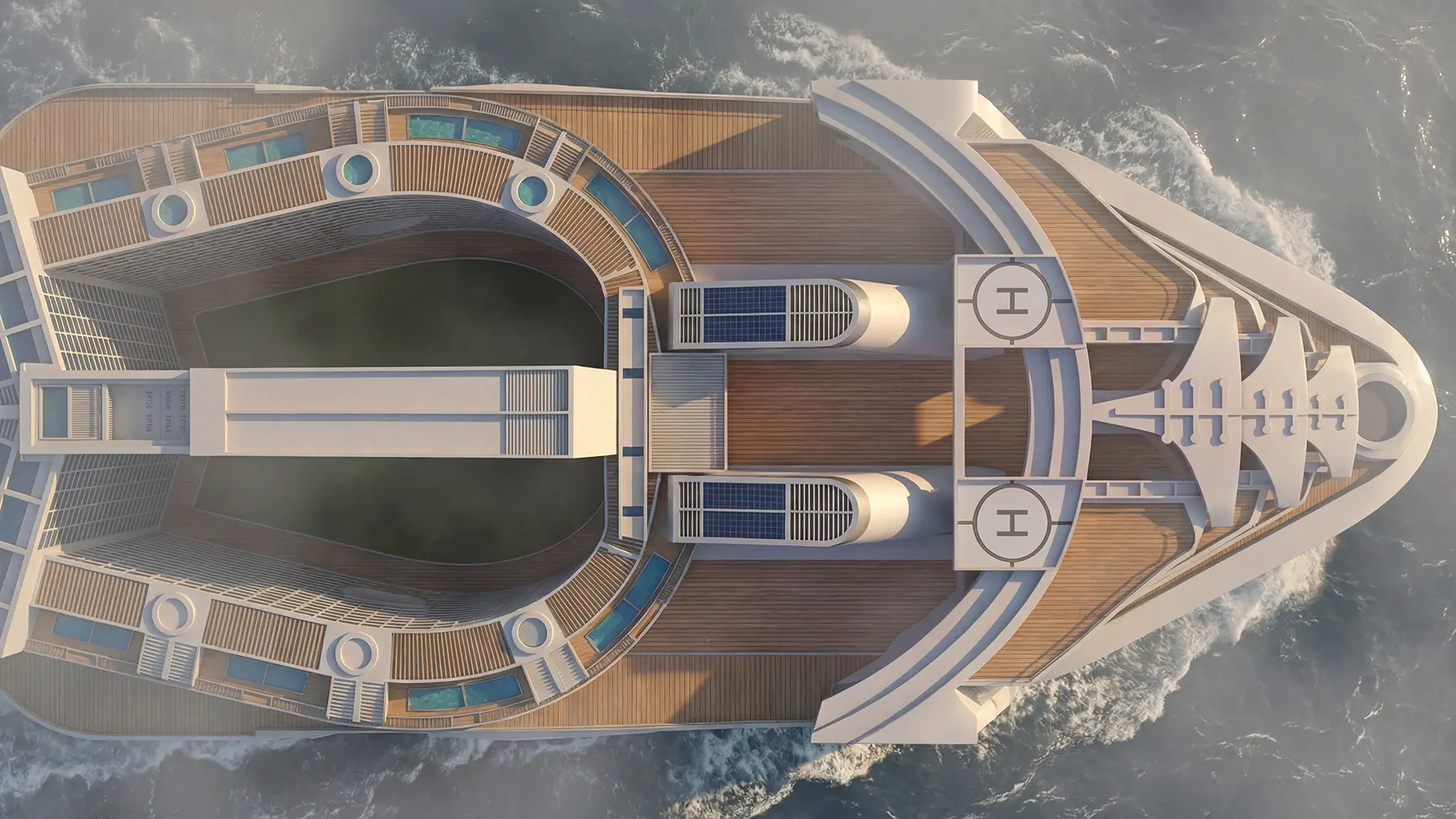
The basic working platform is linear with a determining working dimensions of 750 ft wide, 228.6 m, 5280 ft length, 1609.34 m. A floating platform must balance both program and weight to become one. The master plan begins with establishing a centralized, symmetrical, bilateral spine. This established spine becomes its’ core form organizer and extends stern to bow. All activities extend/programs extend laterally (along the spine) extending port and starboard. This applies to all decks.
Architecture
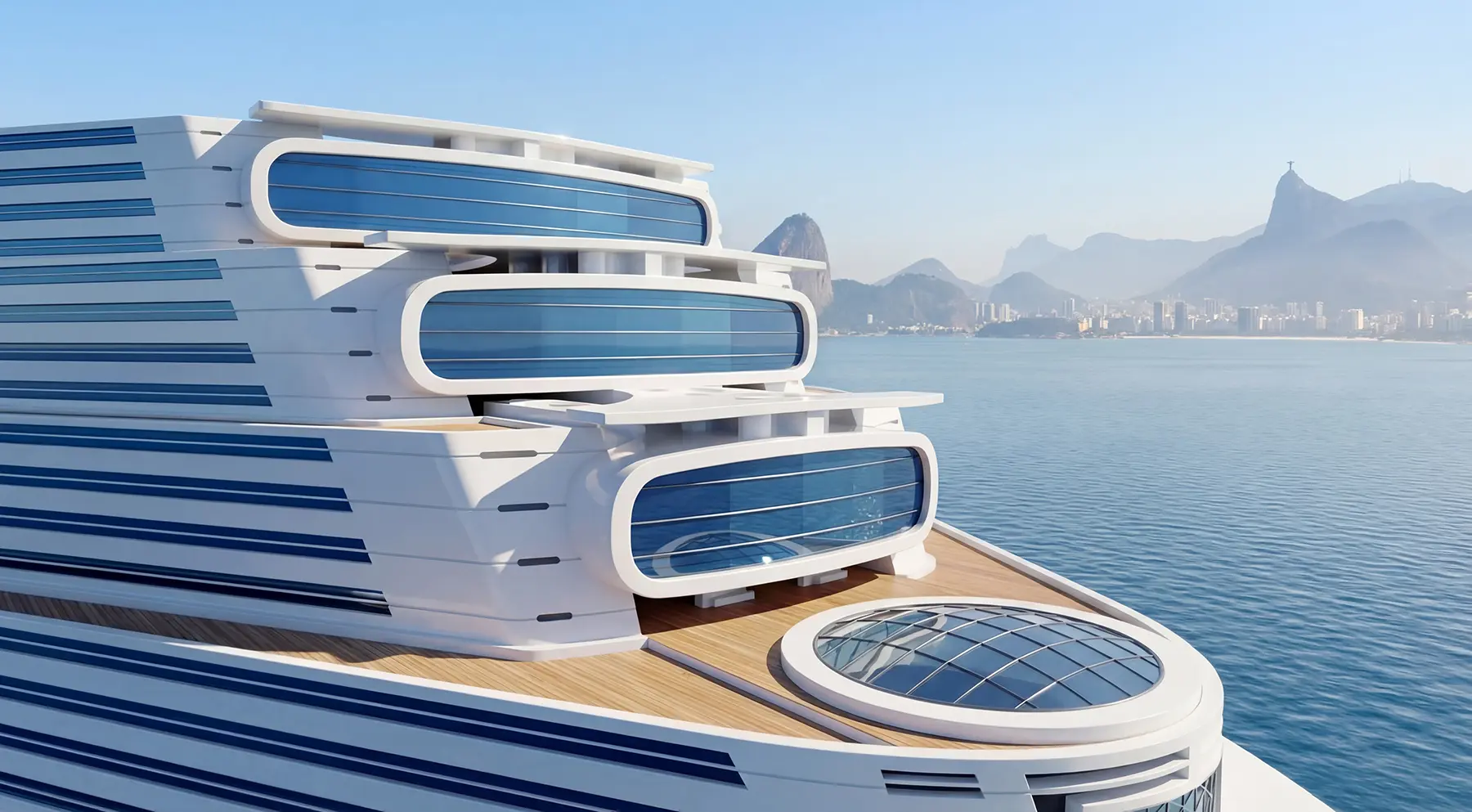
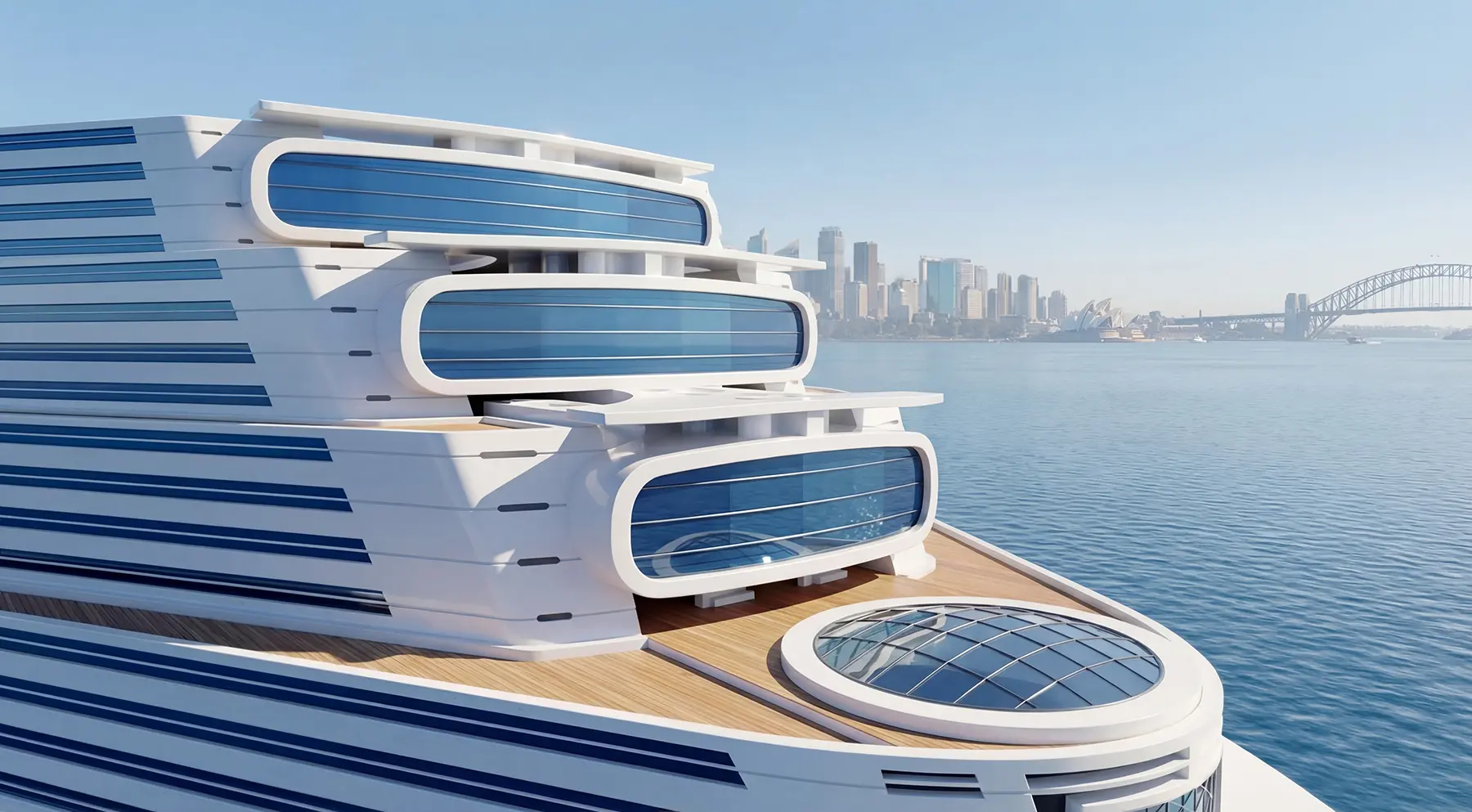
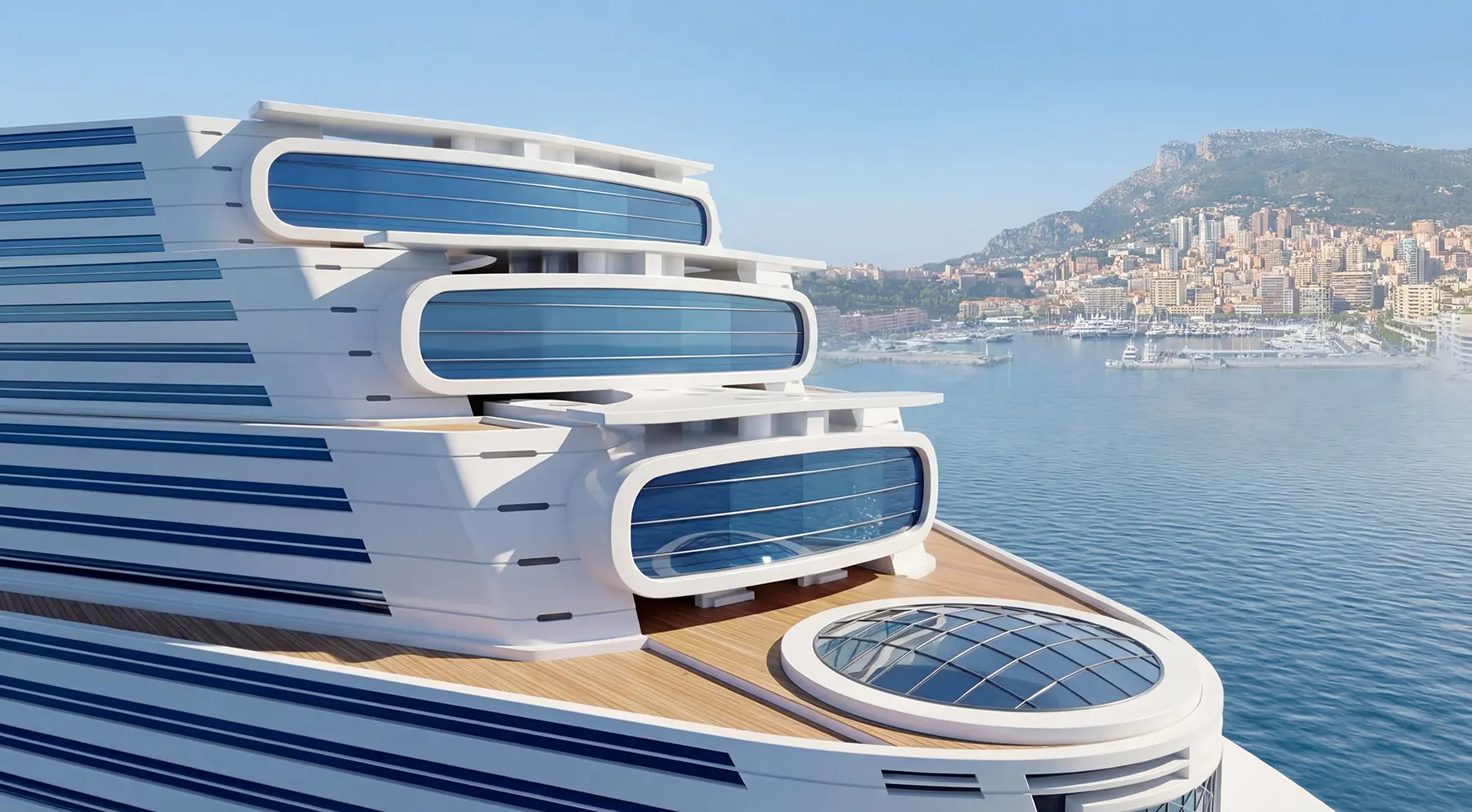
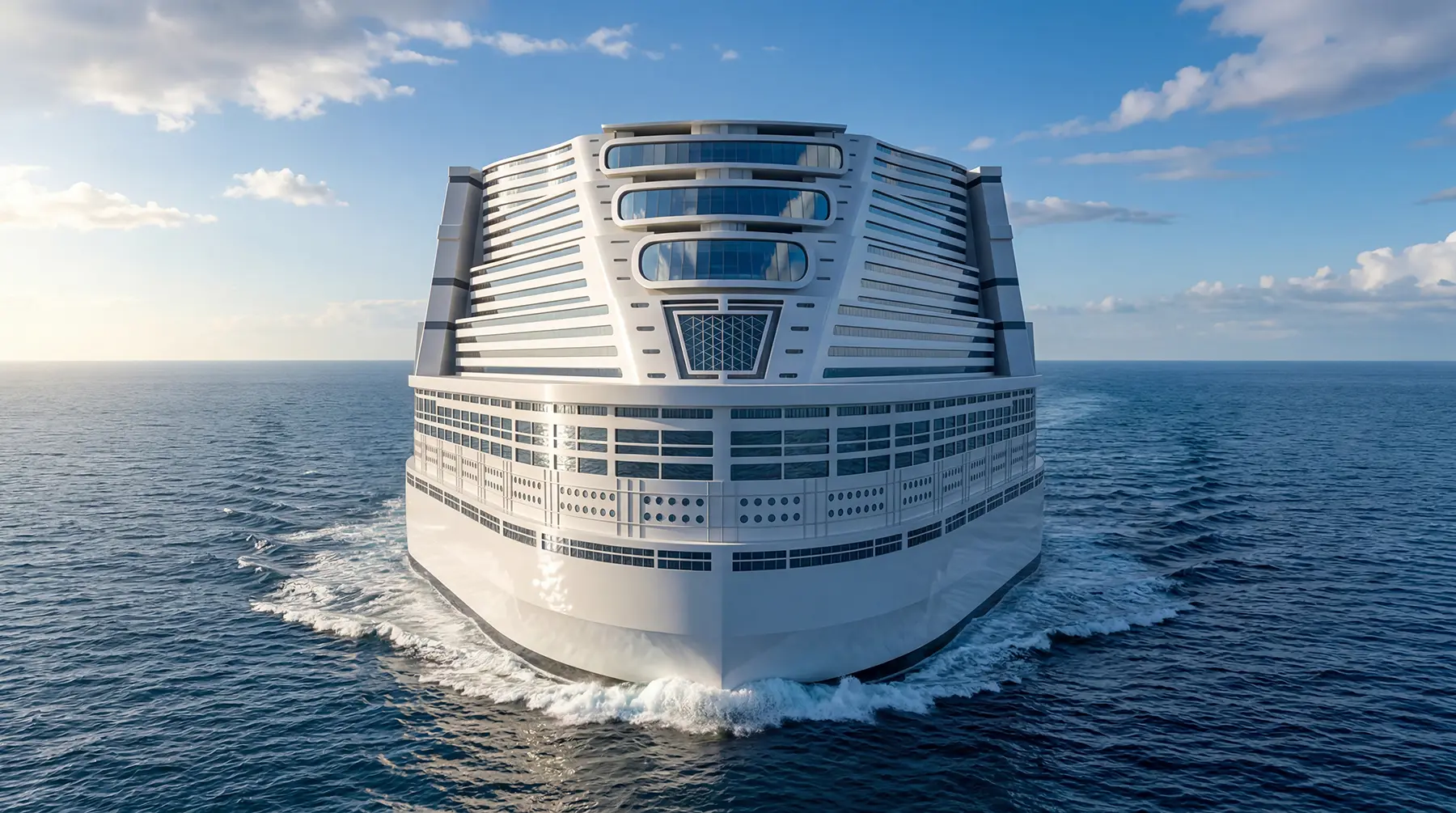
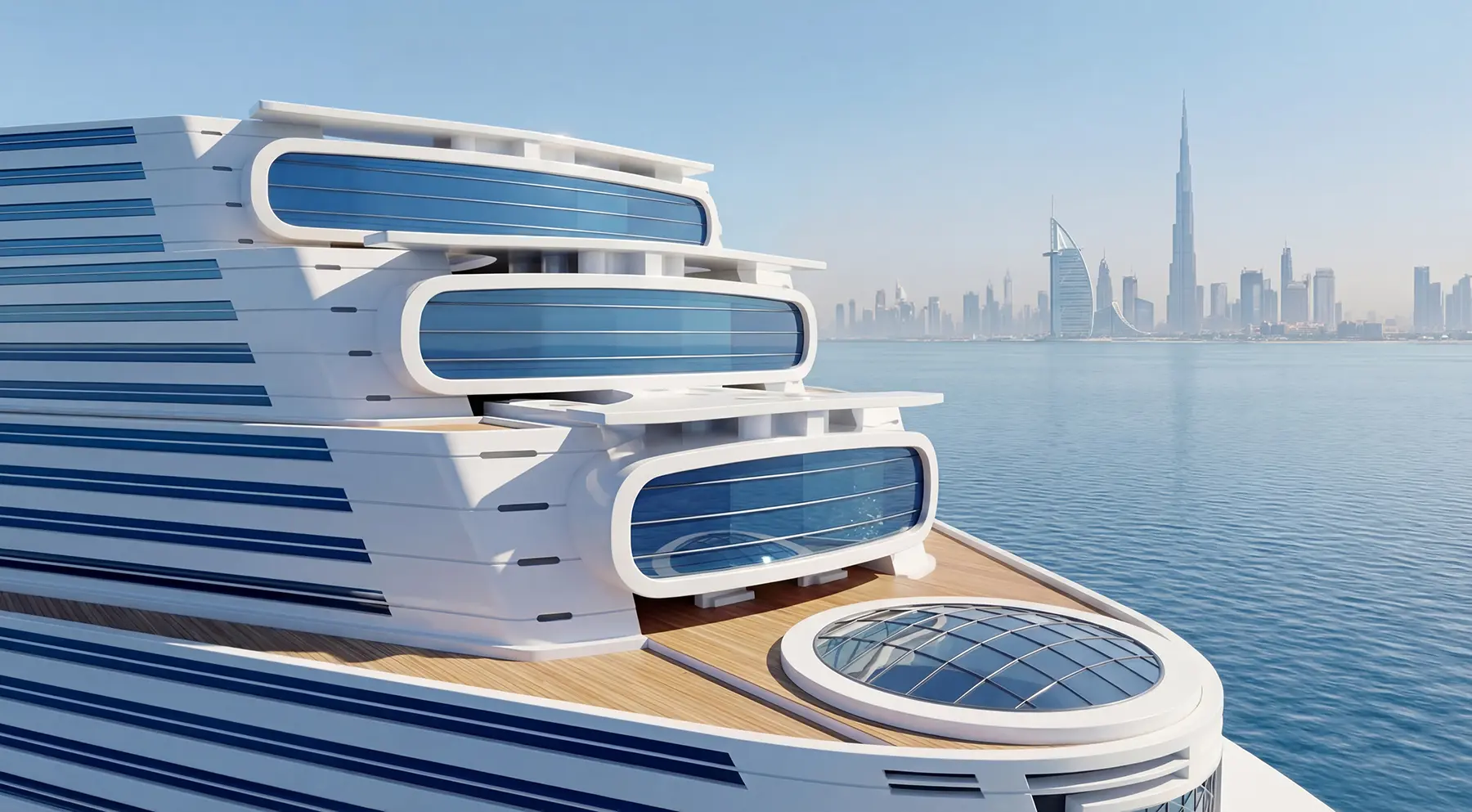
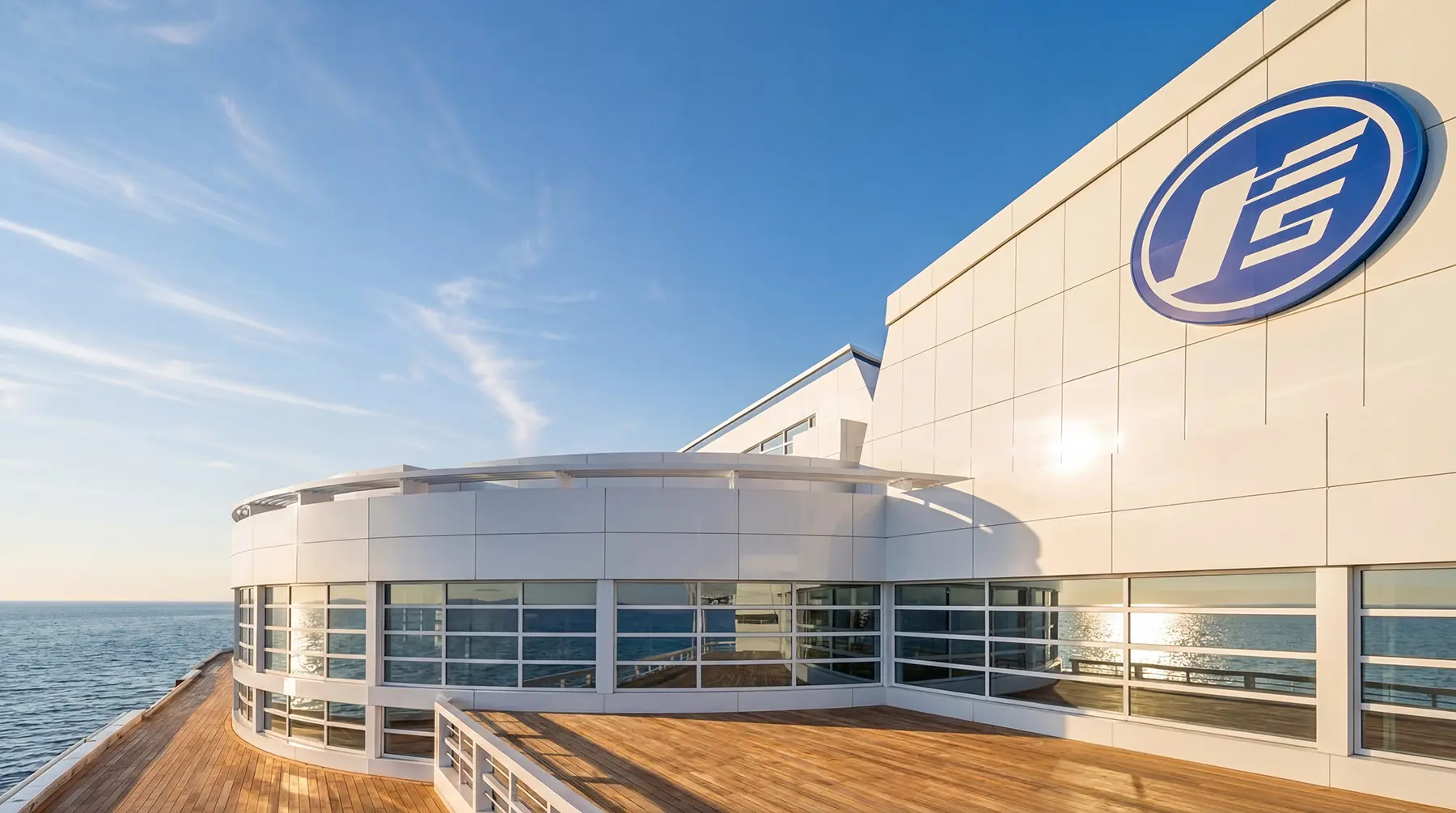
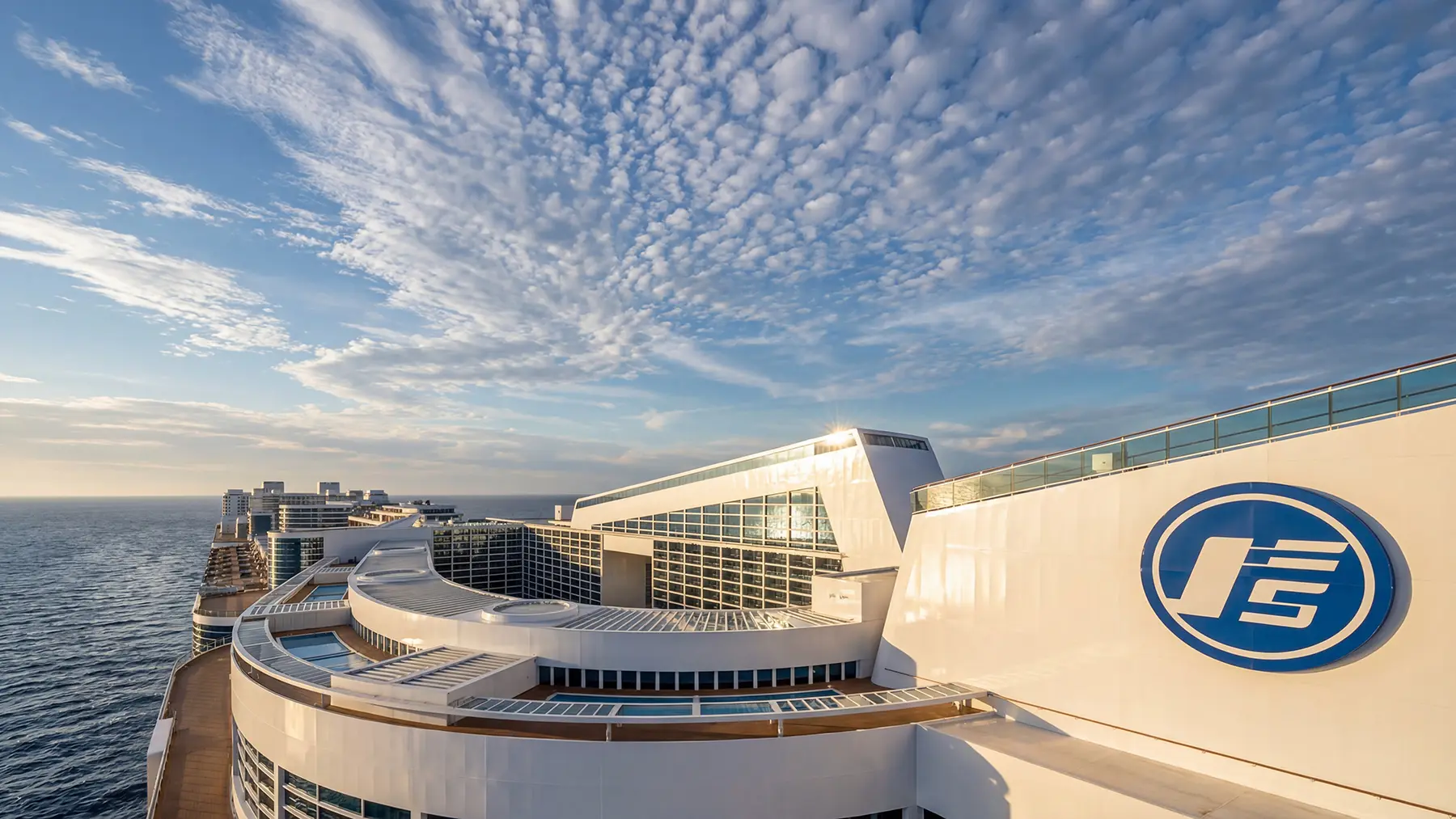
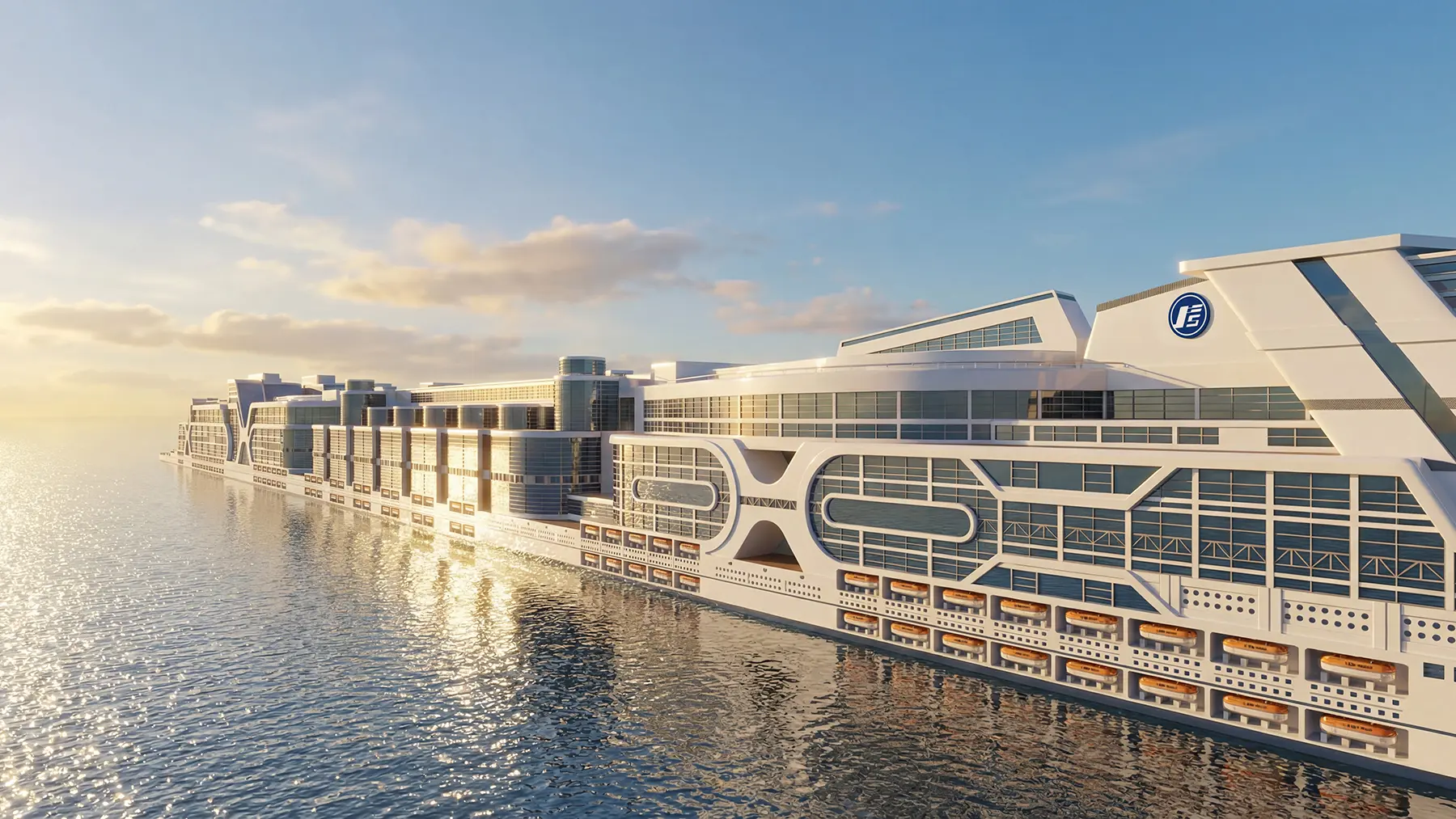
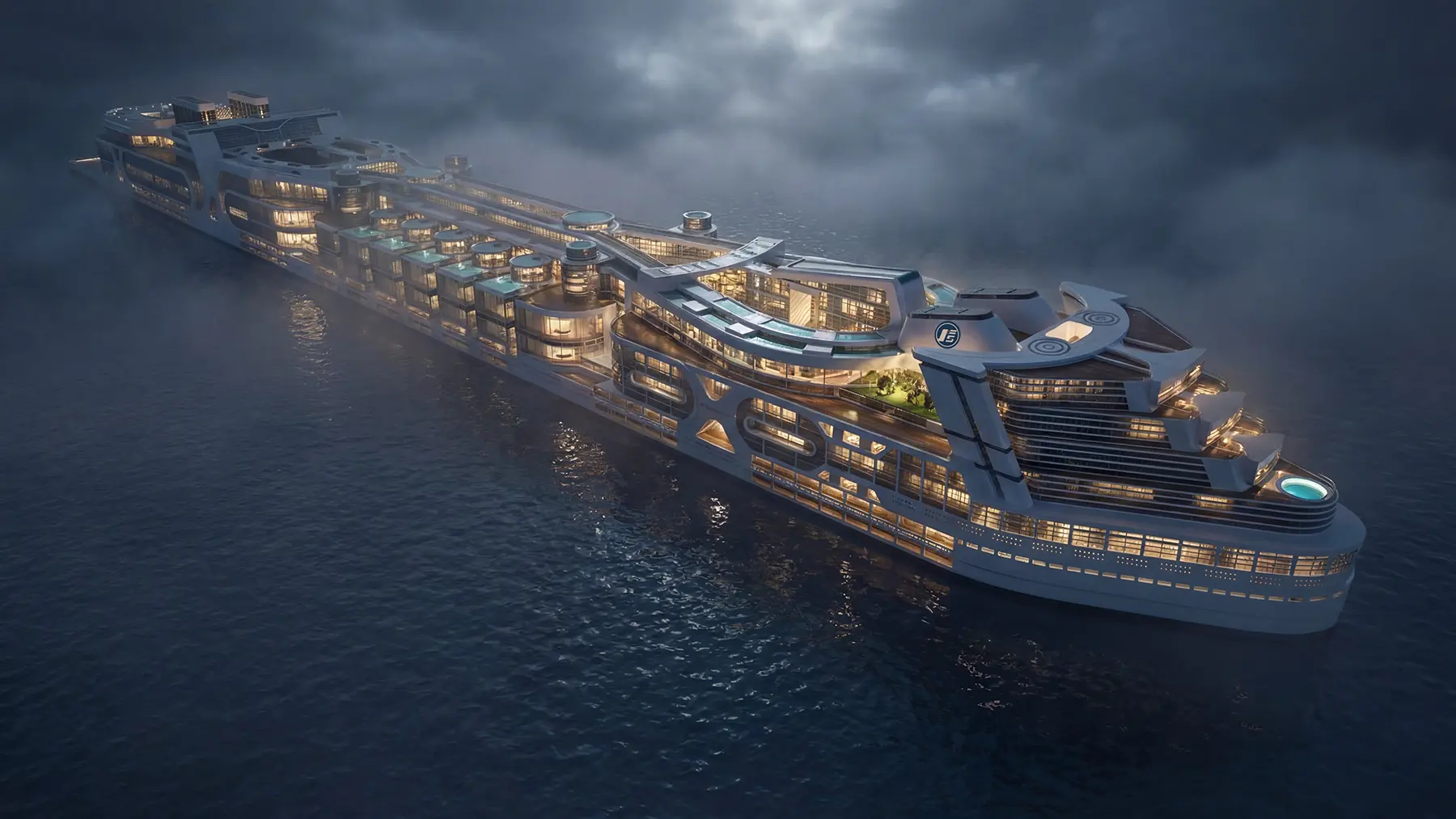
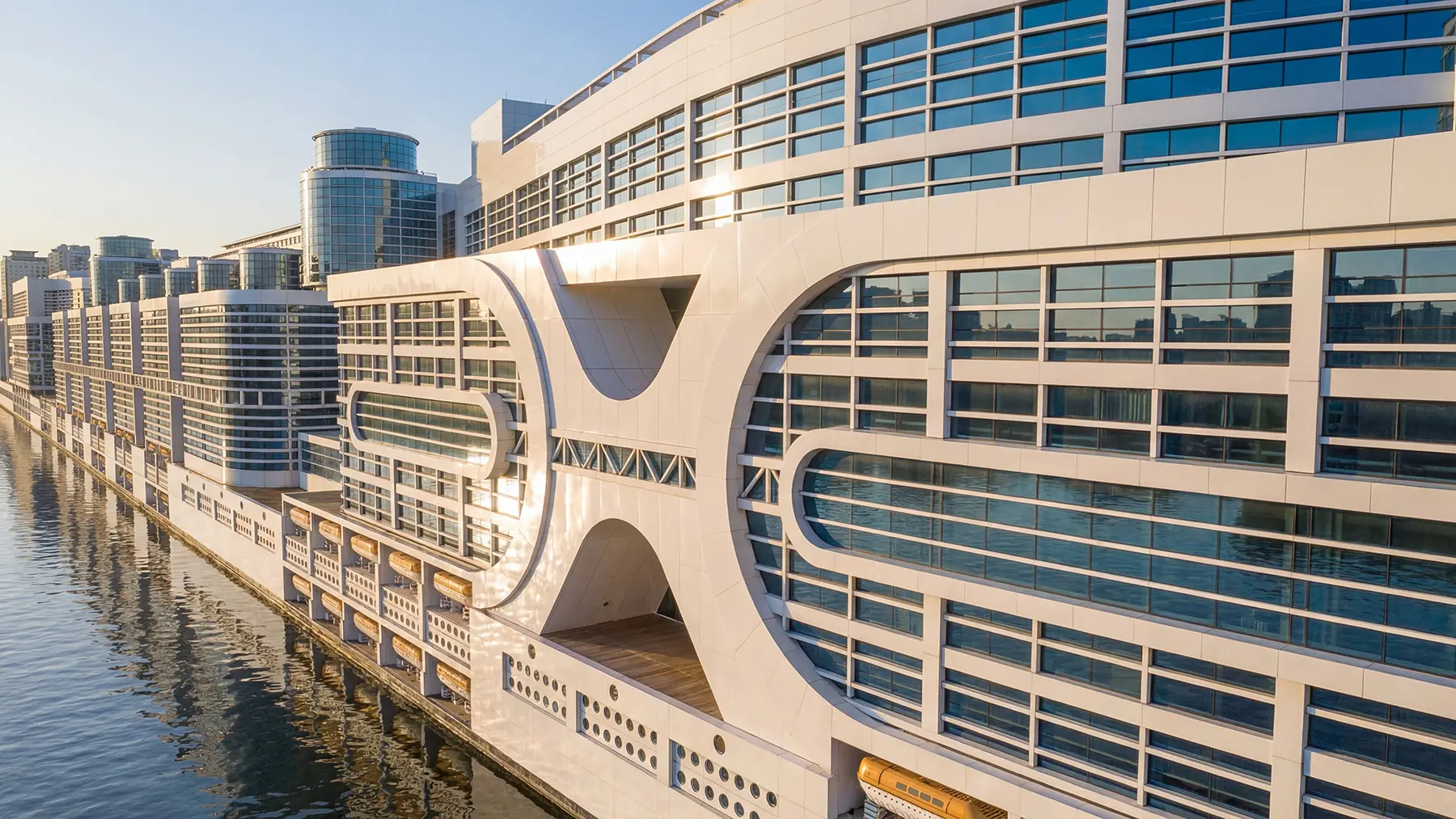
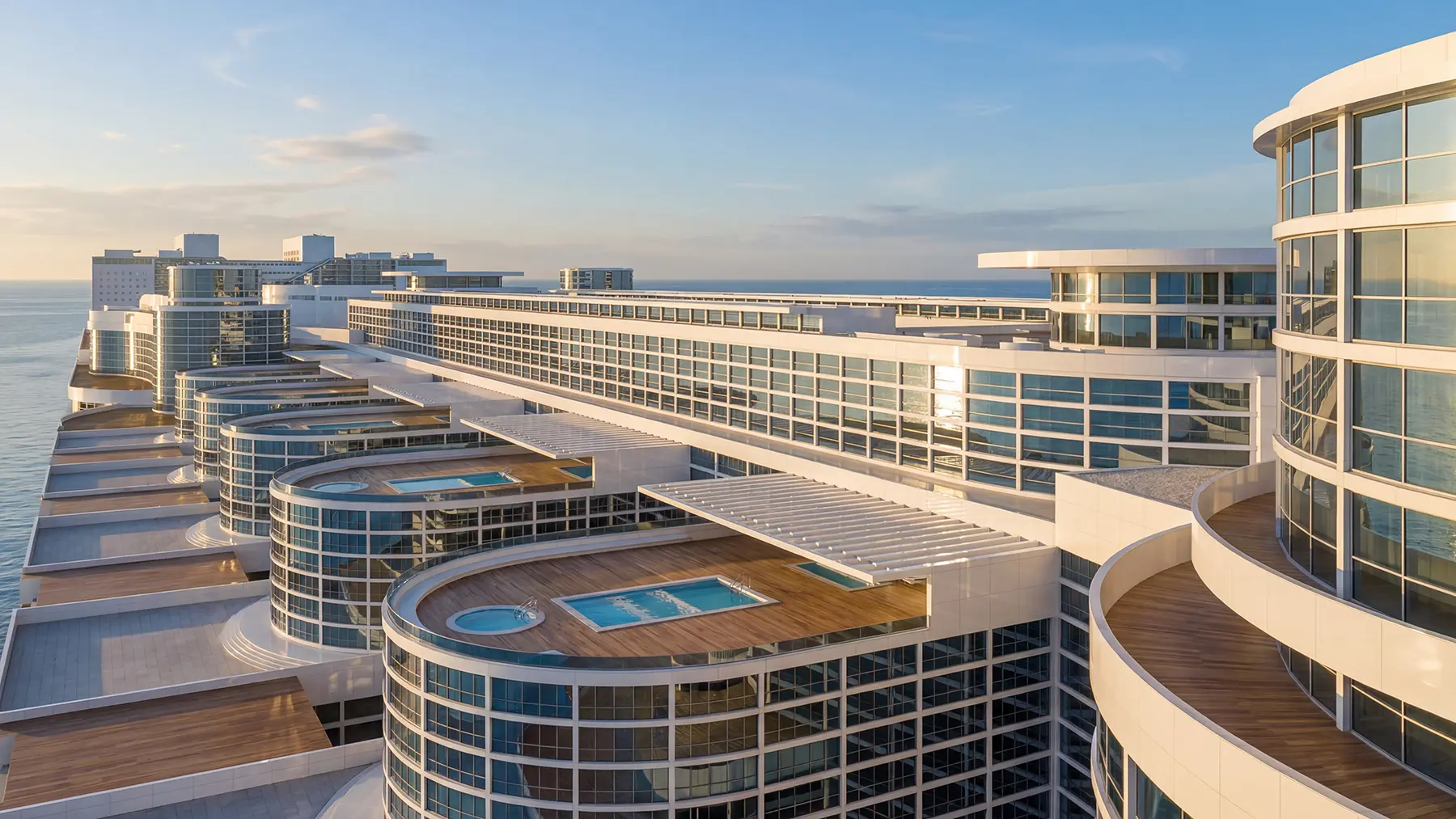
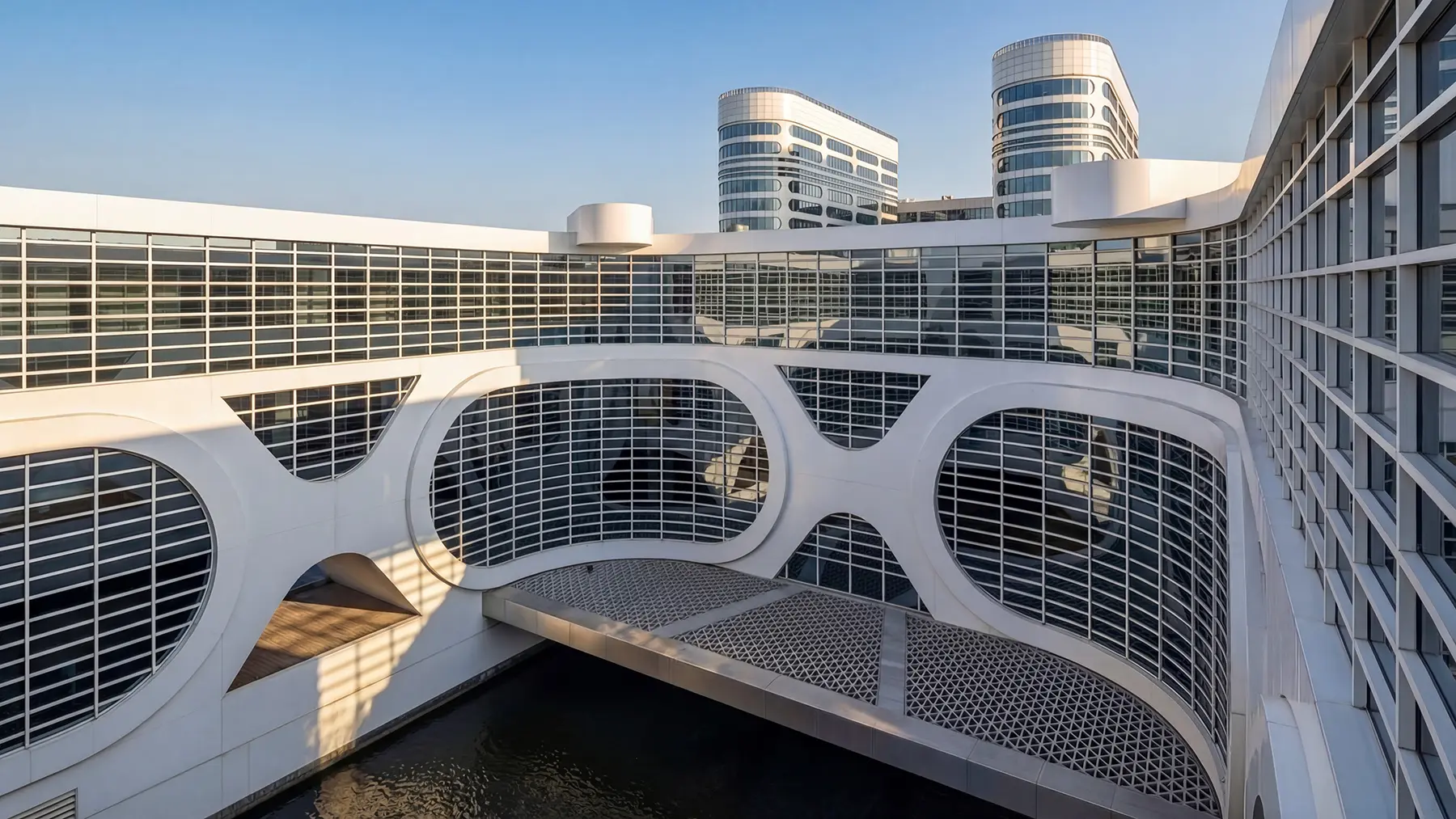
Freedom ship is based upon a clear and purposeful design which strives toward a combination of innovation, planning, and a consistent level of commitment nurtured by its’ global mission. A further mandate is that Freedom Ship should seek out its’ own unique identity and use which will expand beyond the realm of today’s cruise ships. Freedom Ship is more than a traditional ship, it is a city. We have determined that Freedom Ship should not be a single monolithic structure. It should portray its’ usage and demeanor as an enlightened city effect. As such and in keeping with massing mandates, there will be multiple massing levels, layouts, and fenestrations. The design will seek an overall unified vocabulary. Materials will be sea worthy and appropriate to ship position and weather/sea conditions.
Master Plan
Master Plan, in outline form, sets up a strategic methodology to quantify a design process. The main ingredient in this master plan are filtered into three primary disciplines. These include Architecture, Master Planning, and Maritime Shipbuilding.
(Note: General programming is included in a separate category.)
Practical Demeanor
We have determined that Freedom Ship should not be a single monolithic structure. Rather it should portray its usage and demeanor as an enlightened city effect. As such, Freedom Ship allows for multiple massing layouts and a comprehensive program allowing the city to breath through robust application of interior and exterior venues.
Zones
Like all cities, a range of uses is applied as identified zones which allows for combination and adherence to usage allocation. Freedom Ship is divided into four zones. This not only spreads usage but aligns with modular construction. These four zones are as follows:
1. Arrival/departure
2. City Core/center
3. Hospitality
4. Residential
These are primary identifications which will also allow for blending other activities.
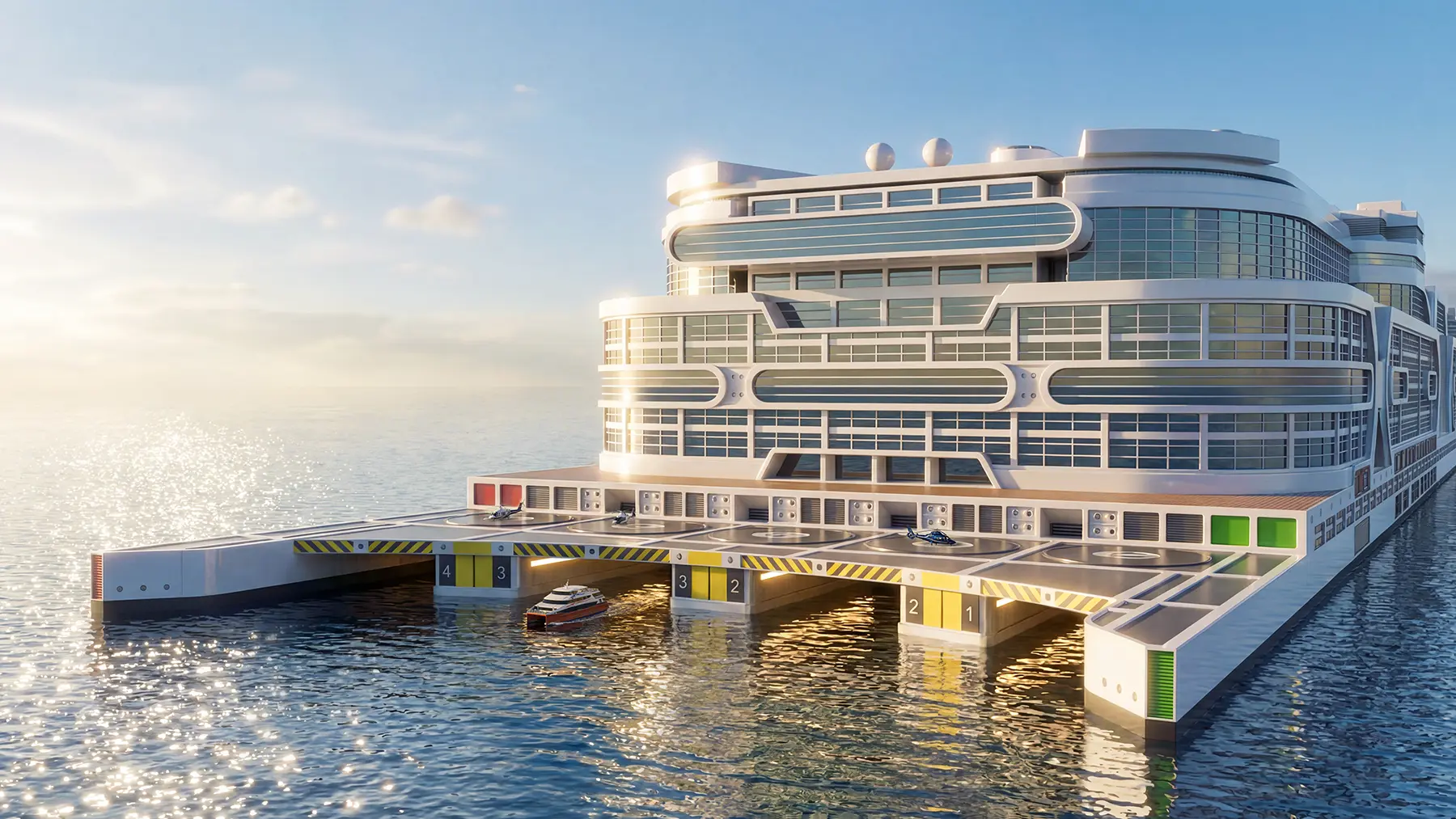
Zone One / Arrival / Departure
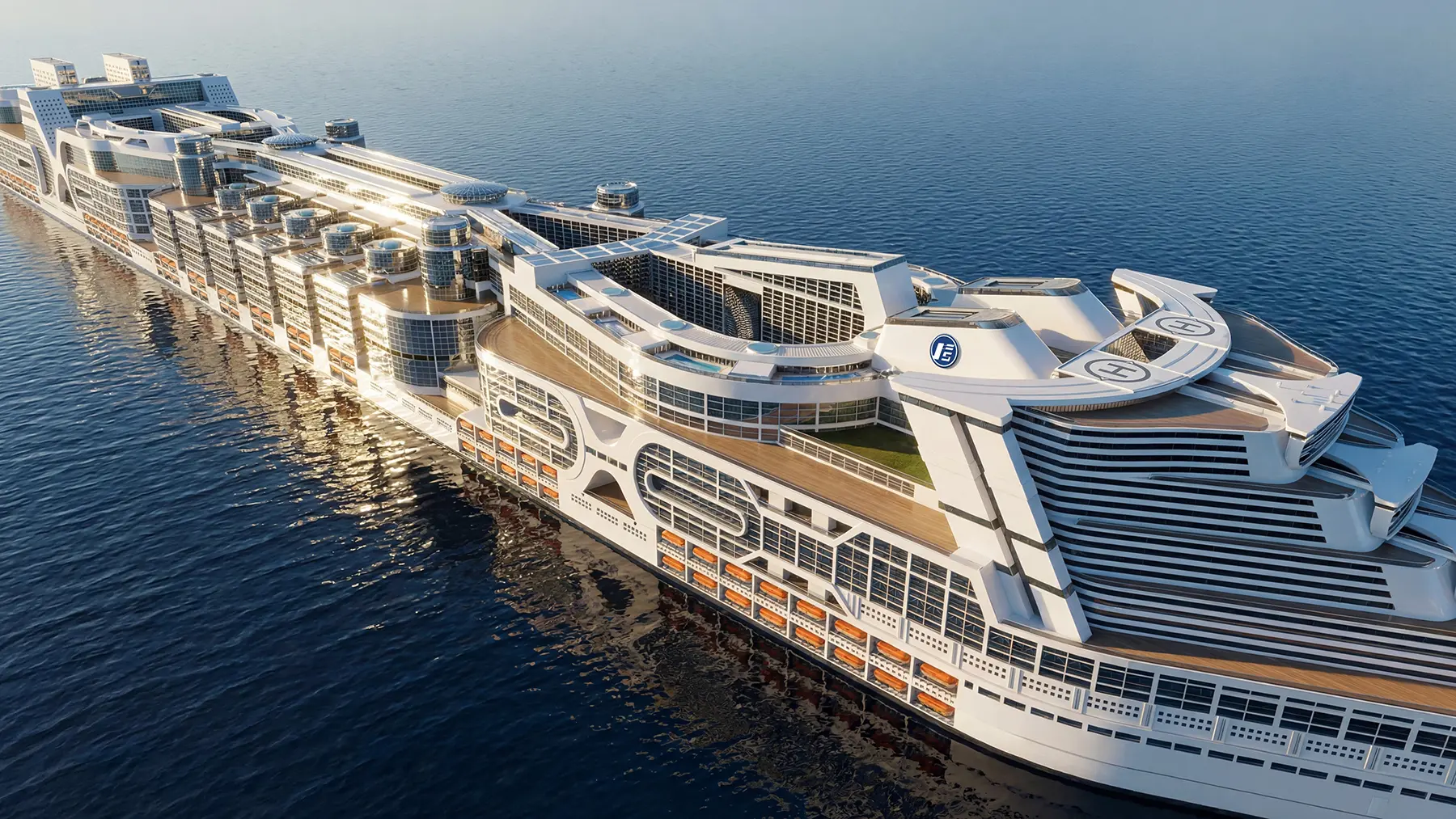
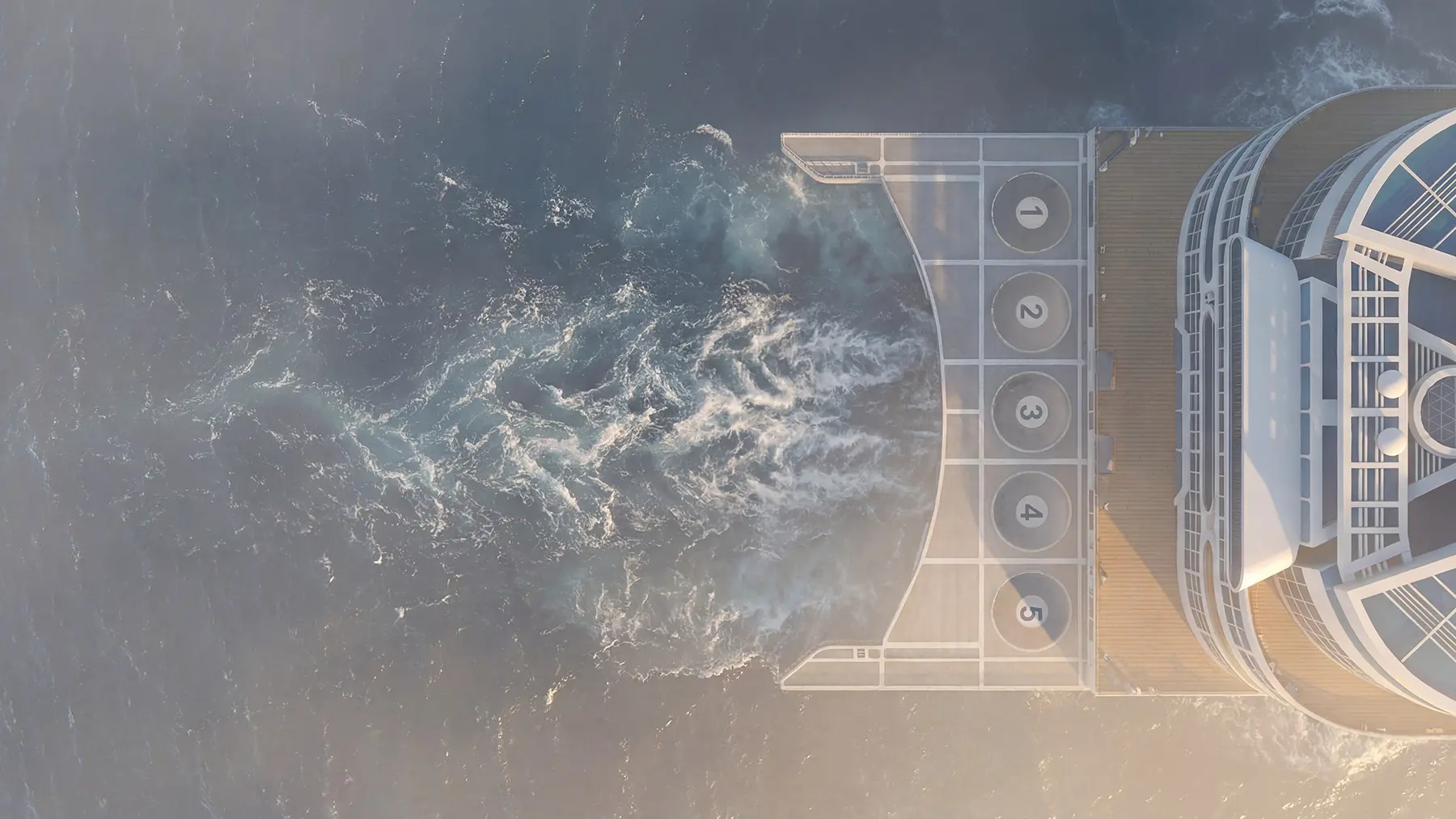
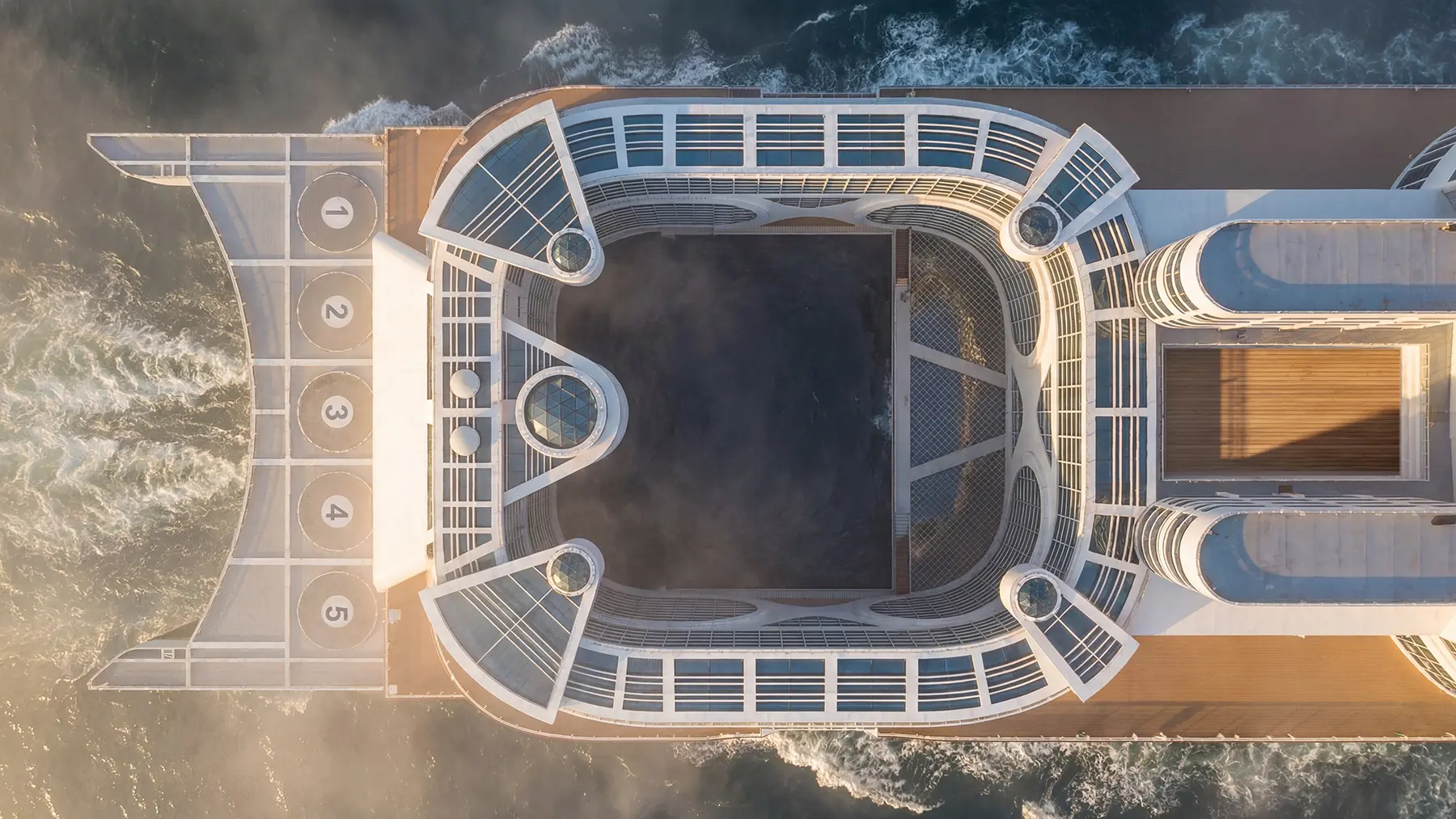
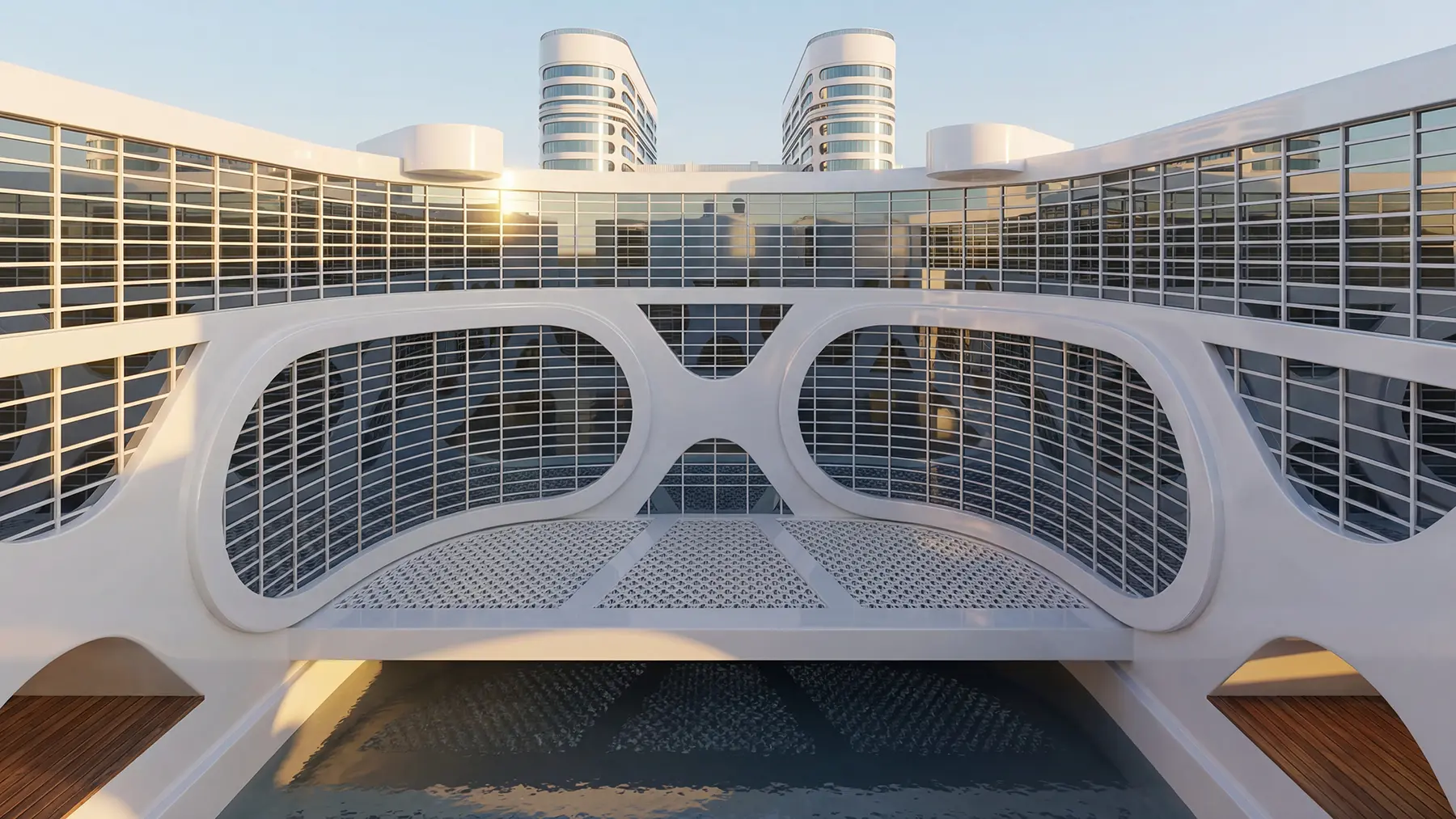
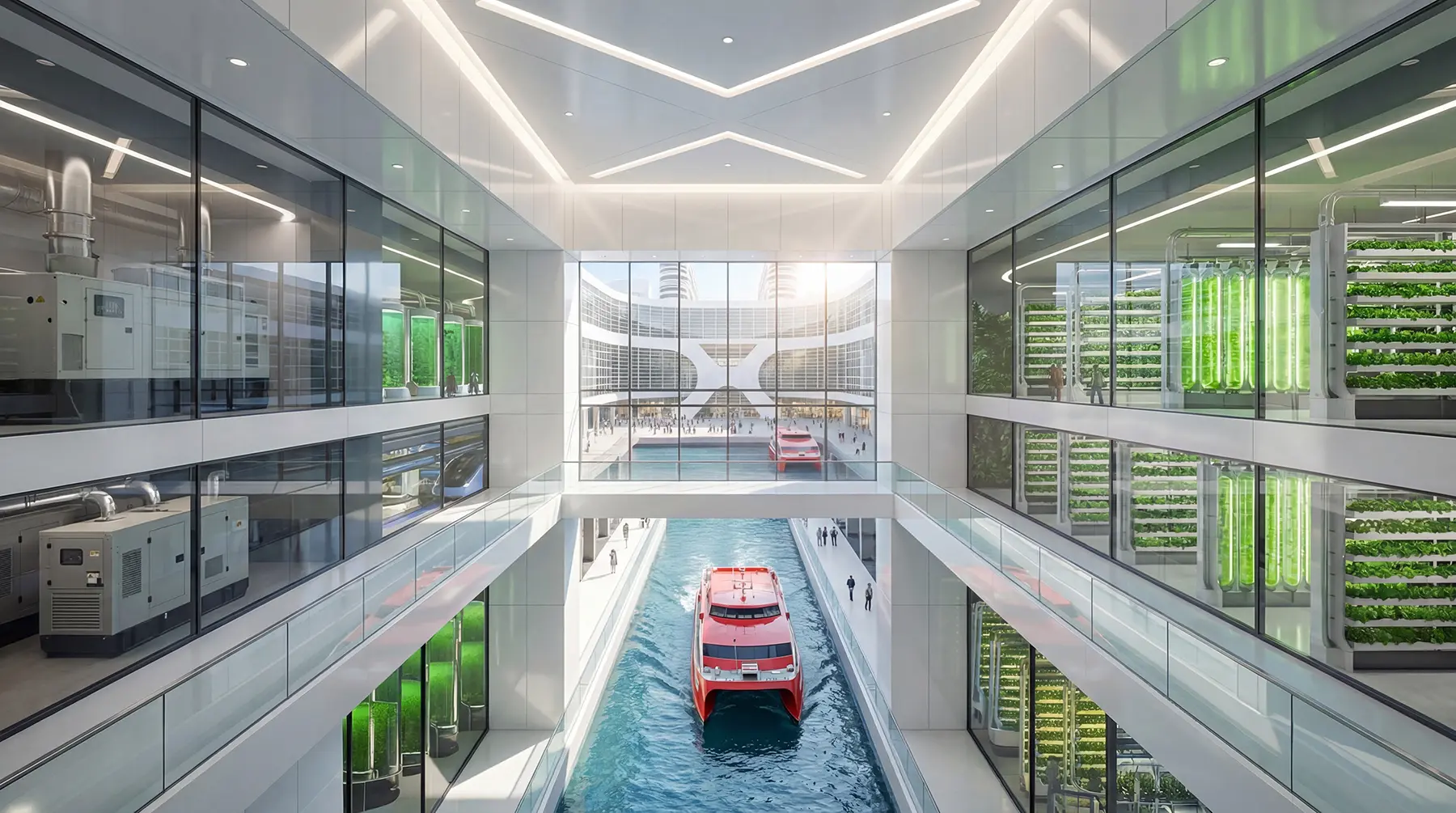
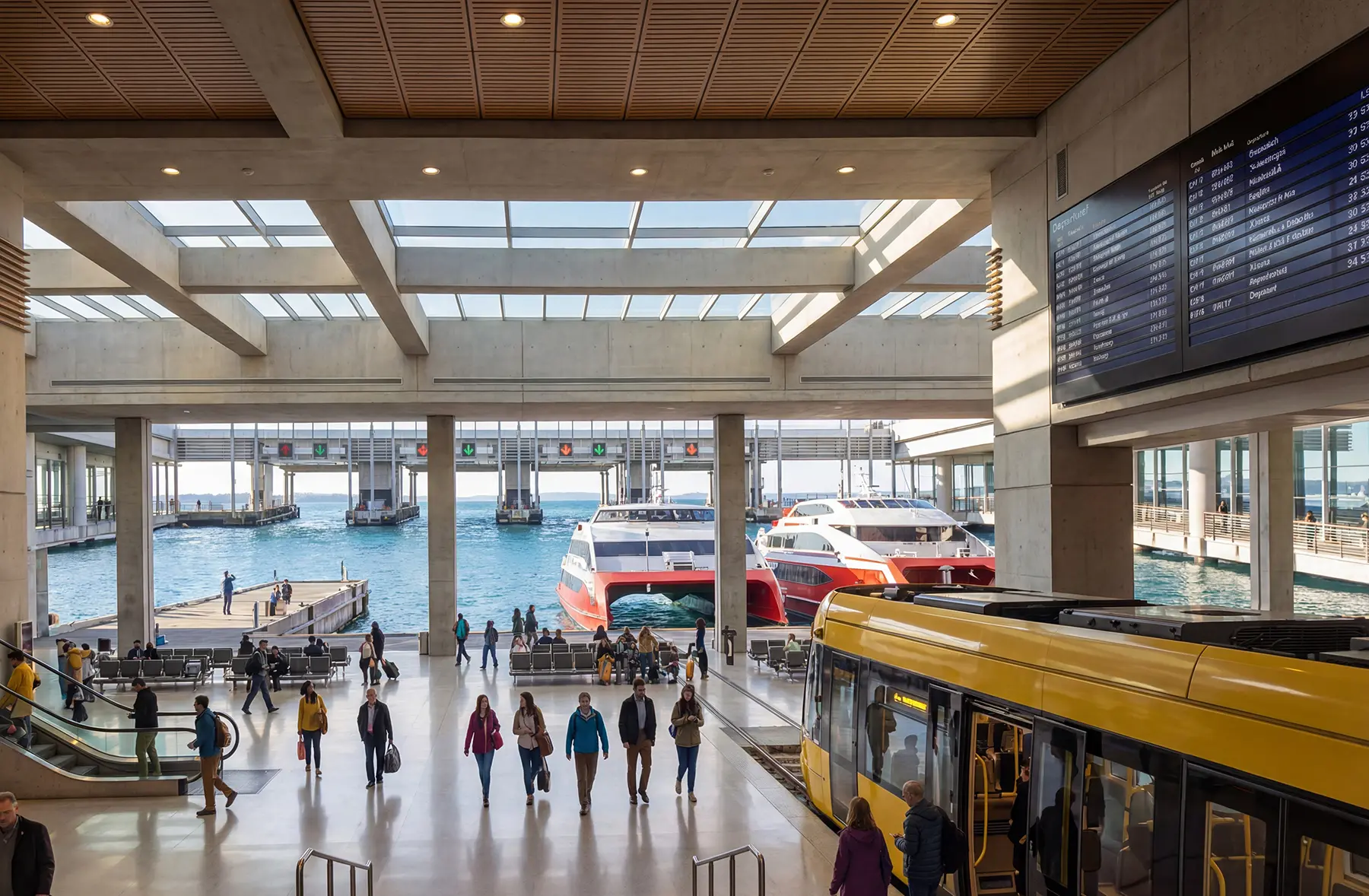
To accommodate a network of ship to shore conveyance, Freedom Ship has designed an artificial calm water harbor and aft deck heliport. All these tie into a central reception area for transportation services throughout the ship.
Zone Two/City Center
Zone Two/city center will be the center of concentrated activities. It is the heart of the city. It is located adjacent to and connecting the harbor and is the confluence of all ship wide program.
Zone Three/Hospitality
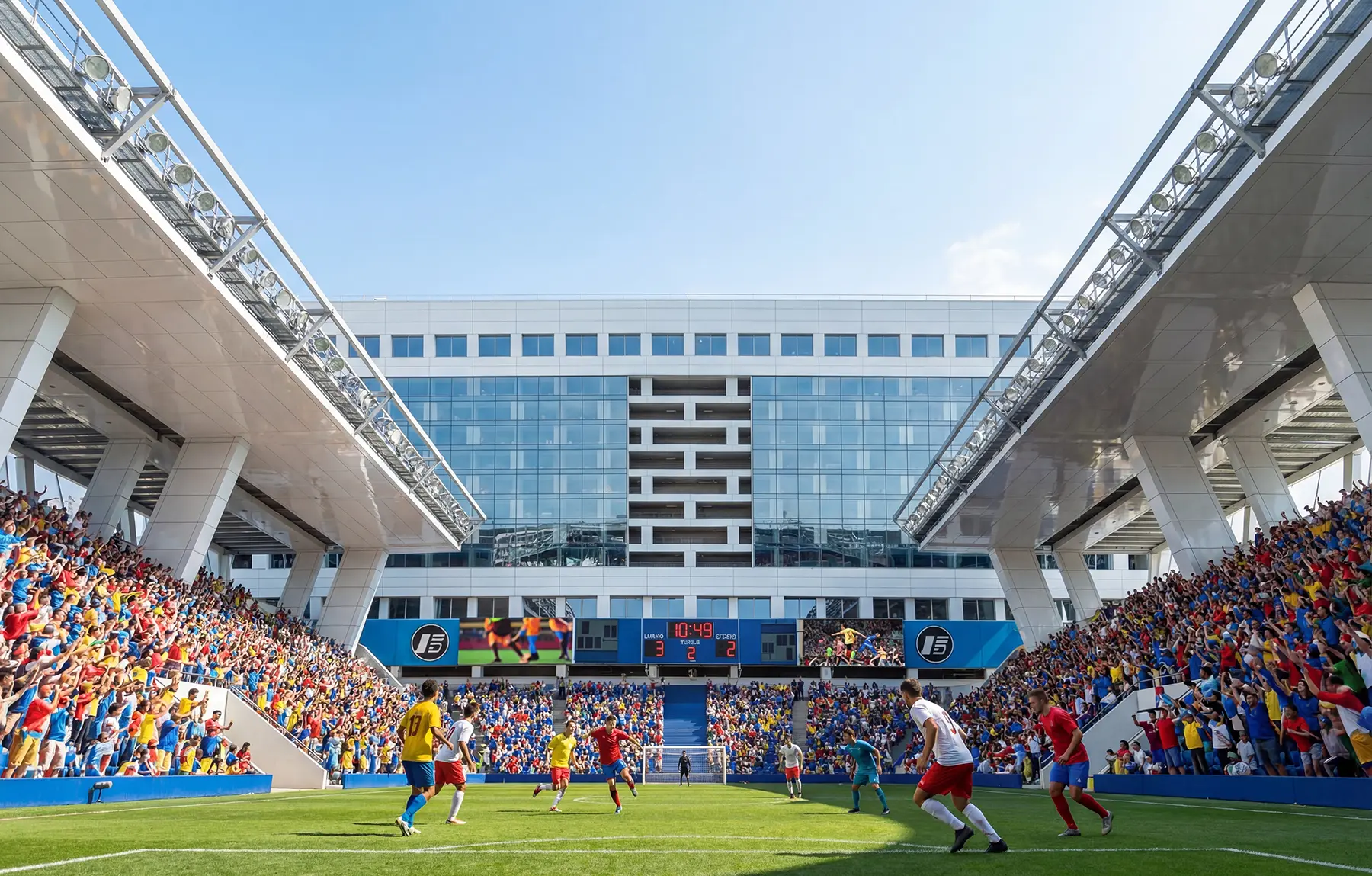
To better accommodate tourists and visitors, hospitality requires more adjacency to transport hubs. Within this zone is a range of activities including waterpark, stadiums, and convention center. Essentially, it is positioned between zones for subtle separation of activities and concentrations of programming.
Zone Four/Residential
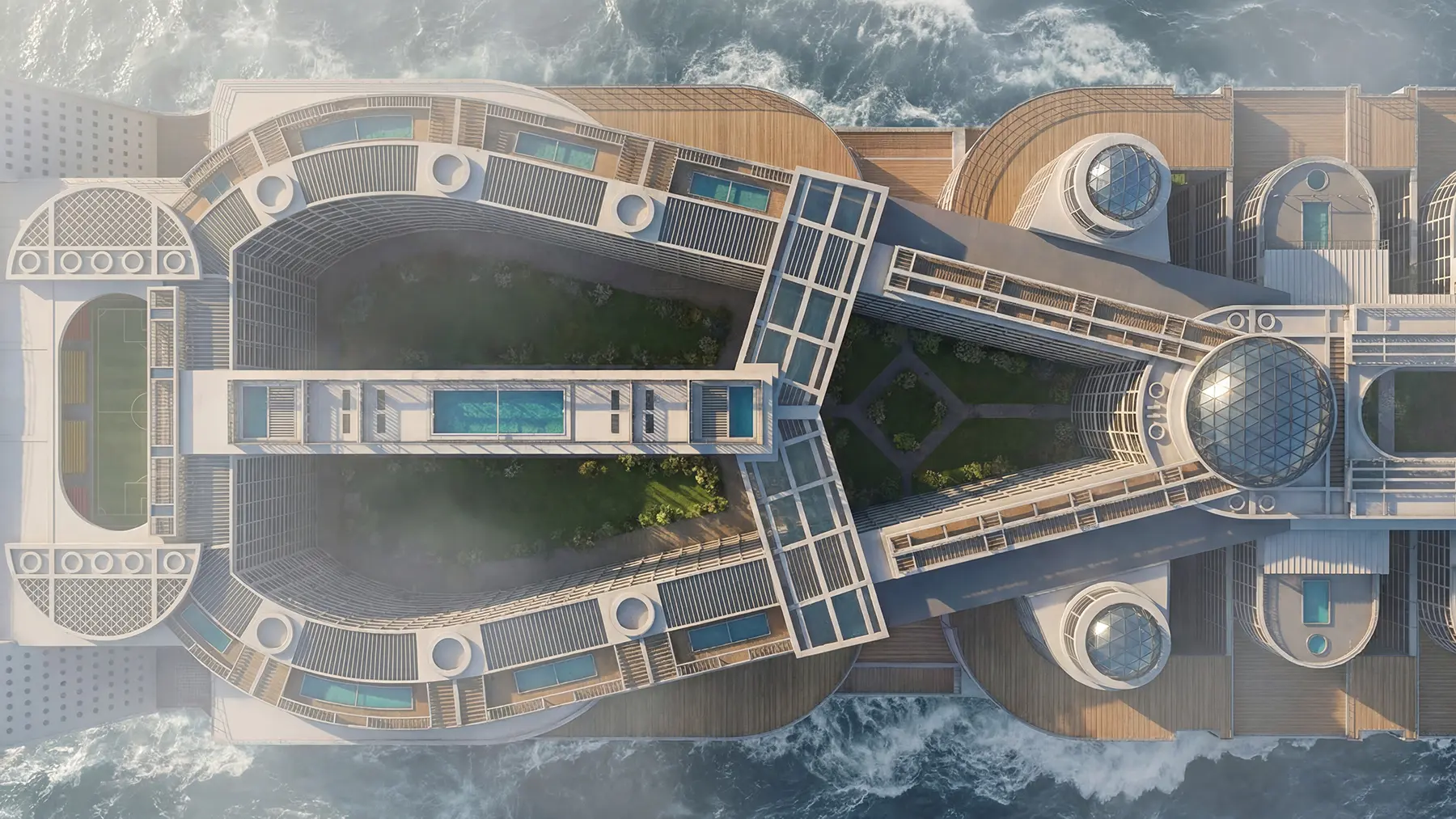
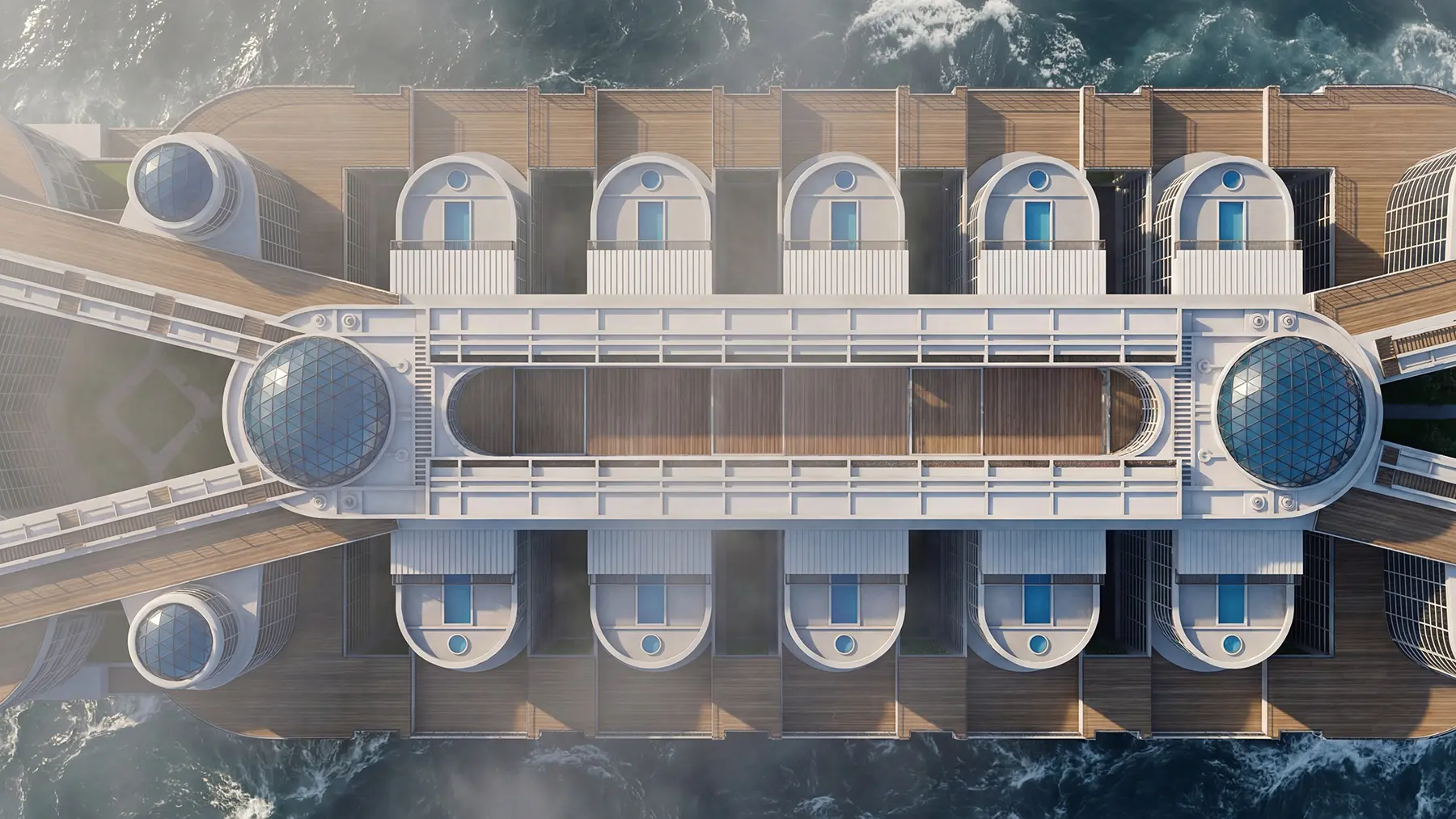
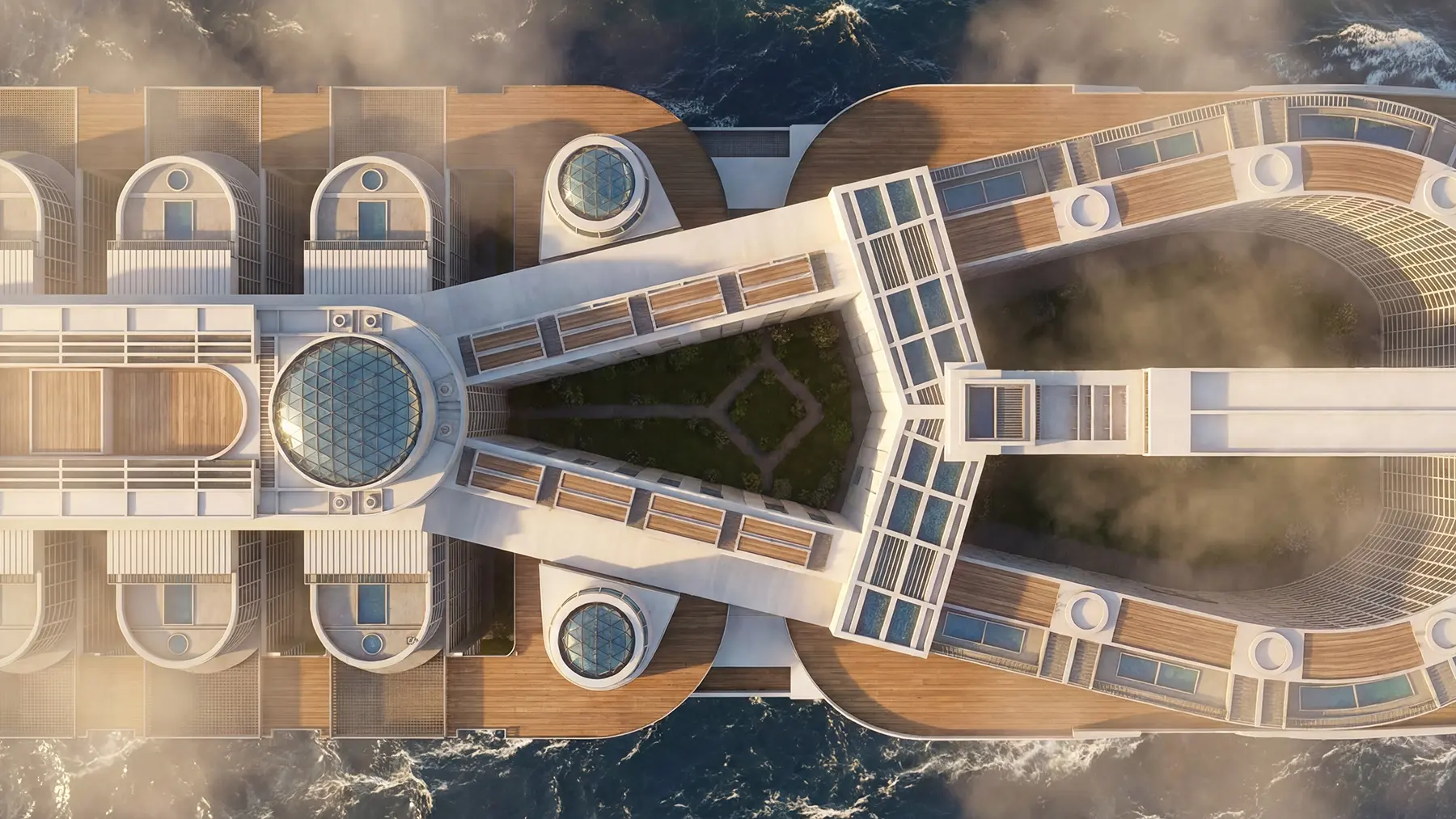
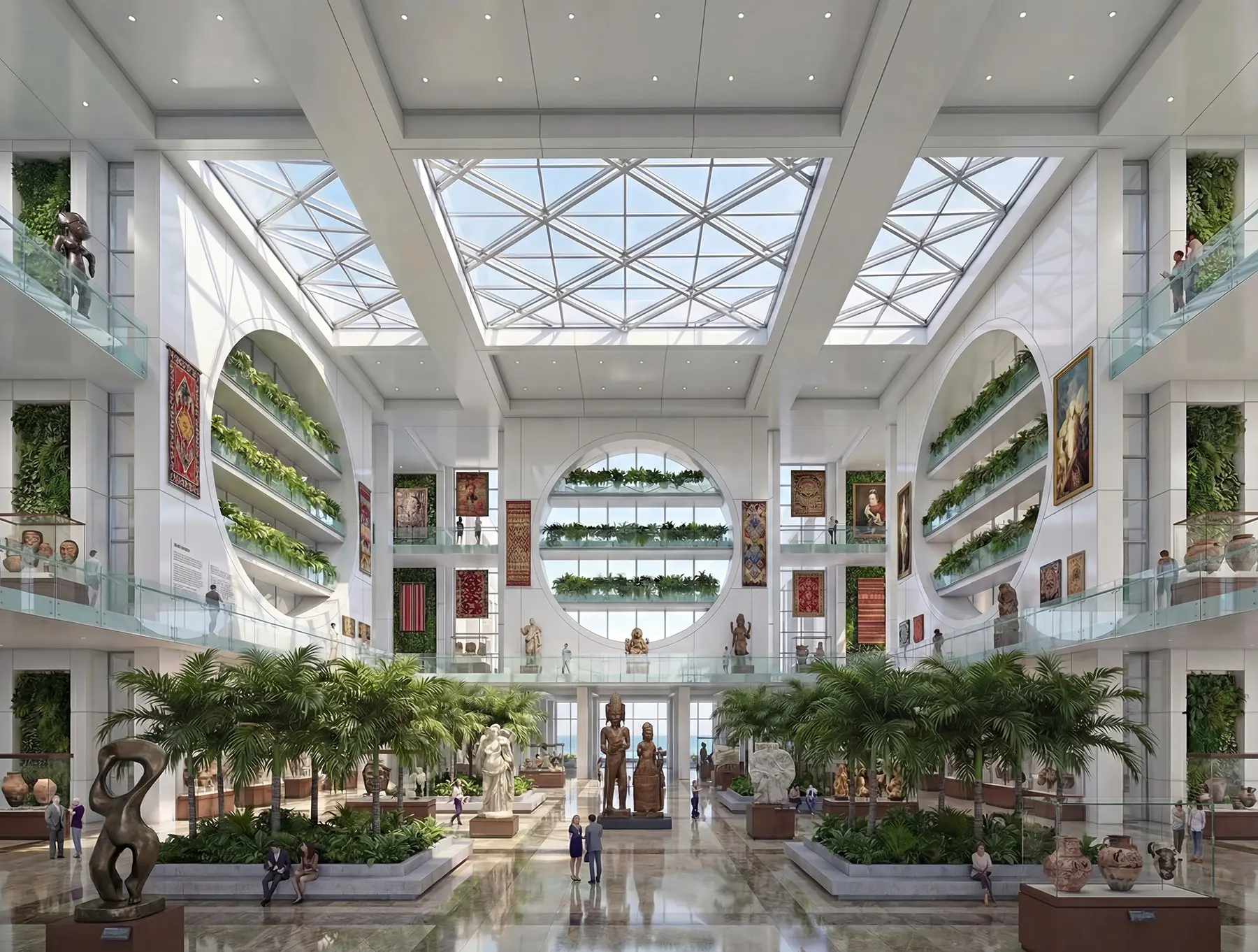
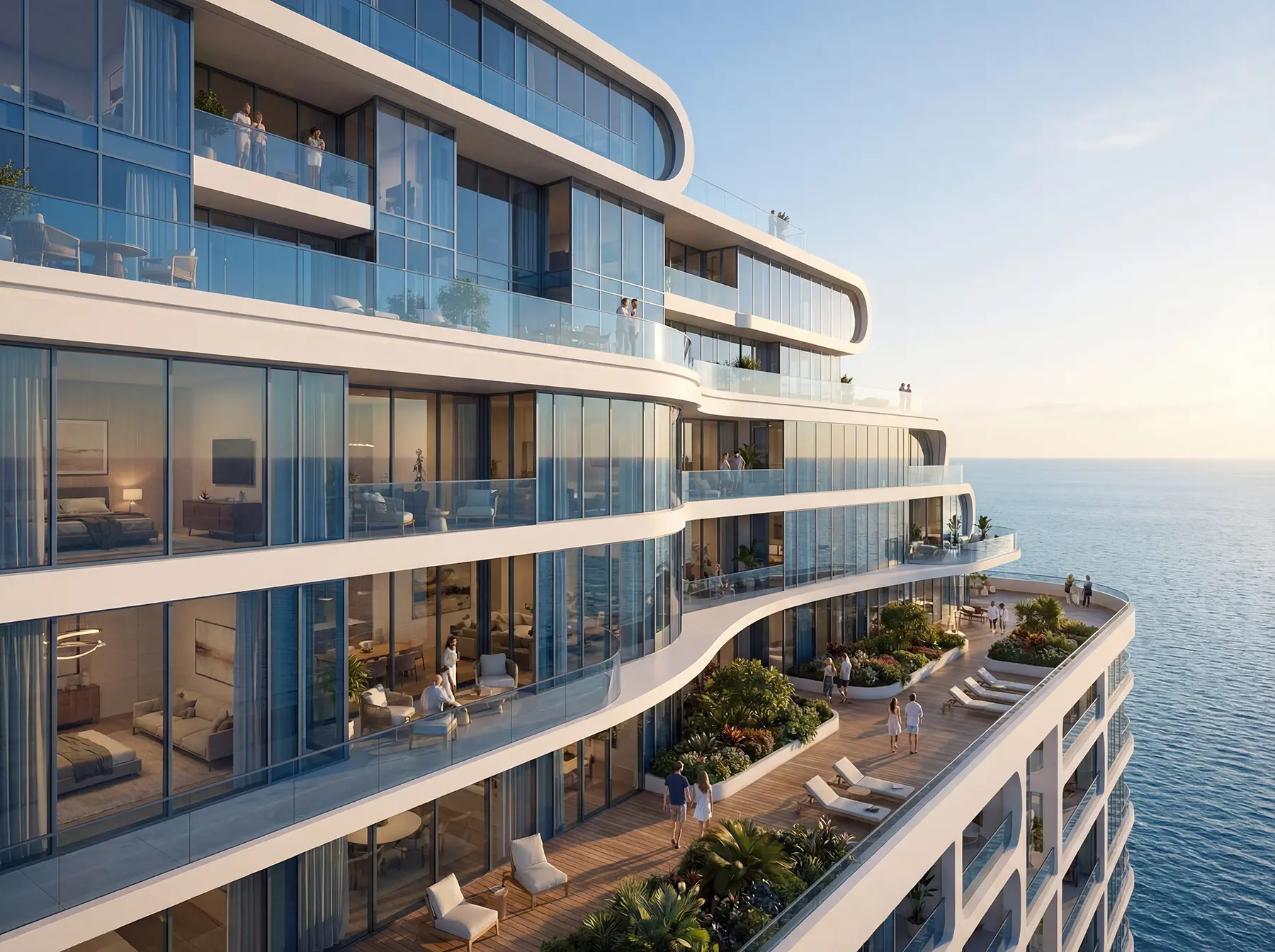
Commencing at midship the residential nucleus. The residential zone begins at midship locations and extends to the bow. The primary format is the establishing of neighborhoods designed as a series of courtyards. The majority of courtyards adhere to appropriate dimensional distances, lines of sight, and blending opportunities. Courtyards will also be able to be varied through architectural style and detail. A central boulevard/atrium creates a common “main street”.
Of Note
There are many sub-programs involved in a master plan process, for the sake of brevity, we have introduced some key elements in that process.
Ocean Views
Much effort has been expended to afford both casual and residential views to the oceans to be travelled. Strategic openings have been designed into courtyard walls, street vistas, and of course, an expansive walkway system.
Walkways
Given the size of Freedom Ship, an entire program has been established to provide multiple walkway systems throughout the ship. Geared primarily toward walking, these paths meander, cross over and are both covered and open. Running tracks also coexist with precision in the sports stadium zone. Bicycles will have limited use. The walkway system is measured at 9.2 miles/14.6 kilometers.
In/Out
As a global traveler, Freedom Ship will encounter a wide range of weather conditions. Accordingly, our program will allow for both weather protected and outdoor activities. This form of redundancy makes activities available year round.
Urban Vegetation
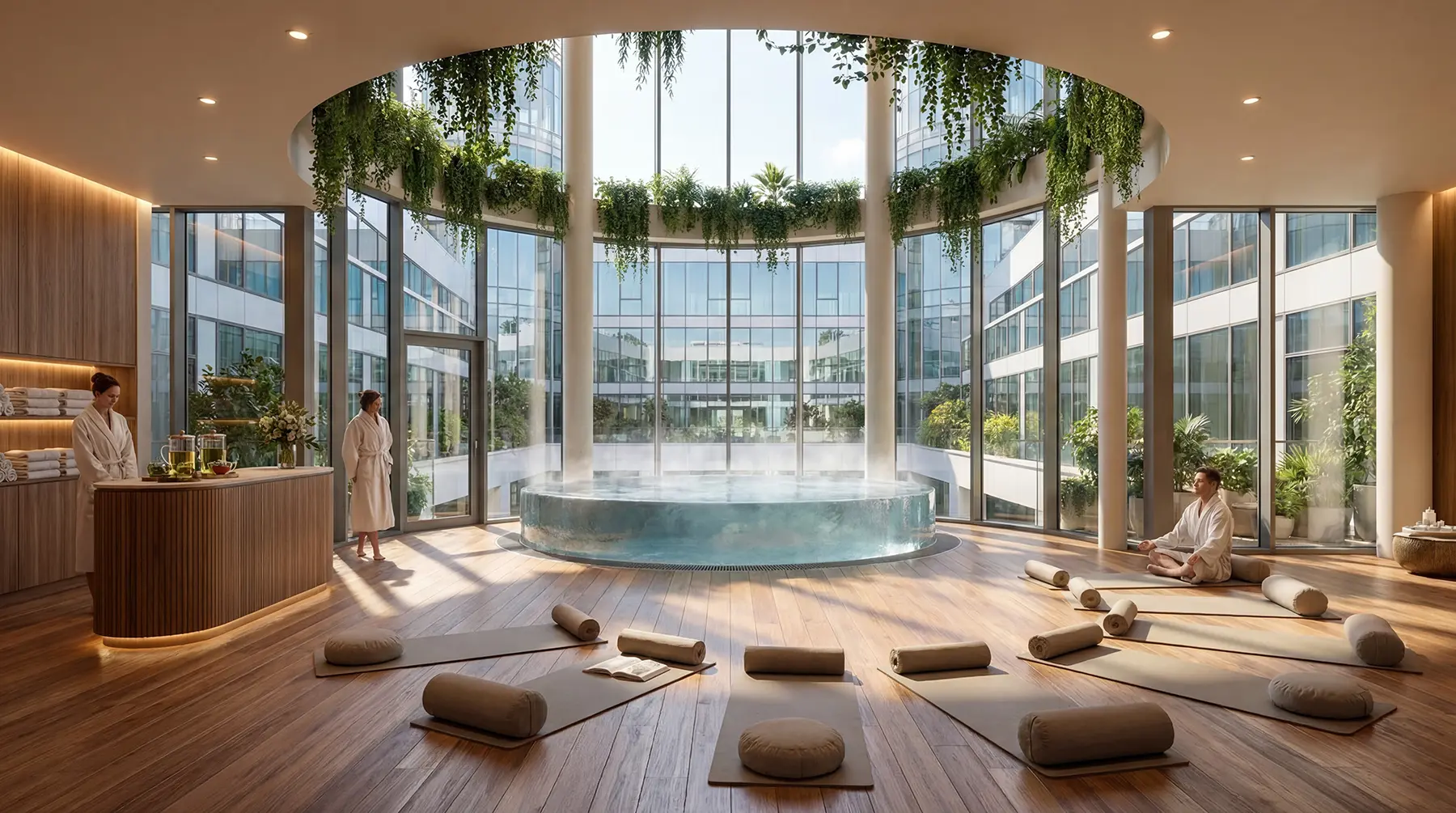
Cities thrive with a robust and planned “green” program. Freedom Ship will introduce multiple venues including pocket parks, botanical gardens, courtyard gardens, and a central park.
Technology
With the introduction of a new and built city, Freedom Ship is pursuing the notion of a “smart city”. As a complex ocean-going machine, coordination of overall operation is critical.
About the Design Architect
Schopfer Associates / E. Kevin Schopfer AIA, RIBA
About the Design Architect
Schopfer Associates / E. Kevin Schopfer AIA, RIBA
Schopfer Associates is an internationally recognized design consulting firm providing Architecture, Interior Design, and Urban Design services across a range of interconnected disciplines. The firm’s portfolio includes large-scale master planning initiatives, mixed-use environments, and complex urban systems.
In addition to traditional architectural practice, Schopfer Associates has engaged in product design, luxury yacht design, and patented design innovations. Over the past two decades, E. Kevin Schopfer has focused on the development of floating architecture and maritime urban environments, a body of work he has described as “BLUland” — Floating Architecture and Urban Design.
His proposals for coastal and floating cities explore alternative methodologies for urban growth in the context of rising sea levels, climate adaptation, and expanding global populations. The Freedom Ship represents a continuation of this long-term research and design exploration at unprecedented scale.