M
o
b
i
l
i
t
y
a
n
d
C
i
r
c
u
l
a
t
i
o
n
Movement That Supports Daily Life
Mobility aboard the Freedom Ship is designed to support everyday life rather than movement for its own sake. Circulation systems are planned at city scale, prioritizing ease, accessibility, and clarity so that residents can move naturally through the city as part of daily routines.
Walkability forms the foundation of internal movement. Residential neighborhoods, workplaces, services, and public spaces are arranged to encourage walking as the primary mode of circulation. Distances are scaled to human use, reinforcing proximity and reducing reliance on complex internal transport.
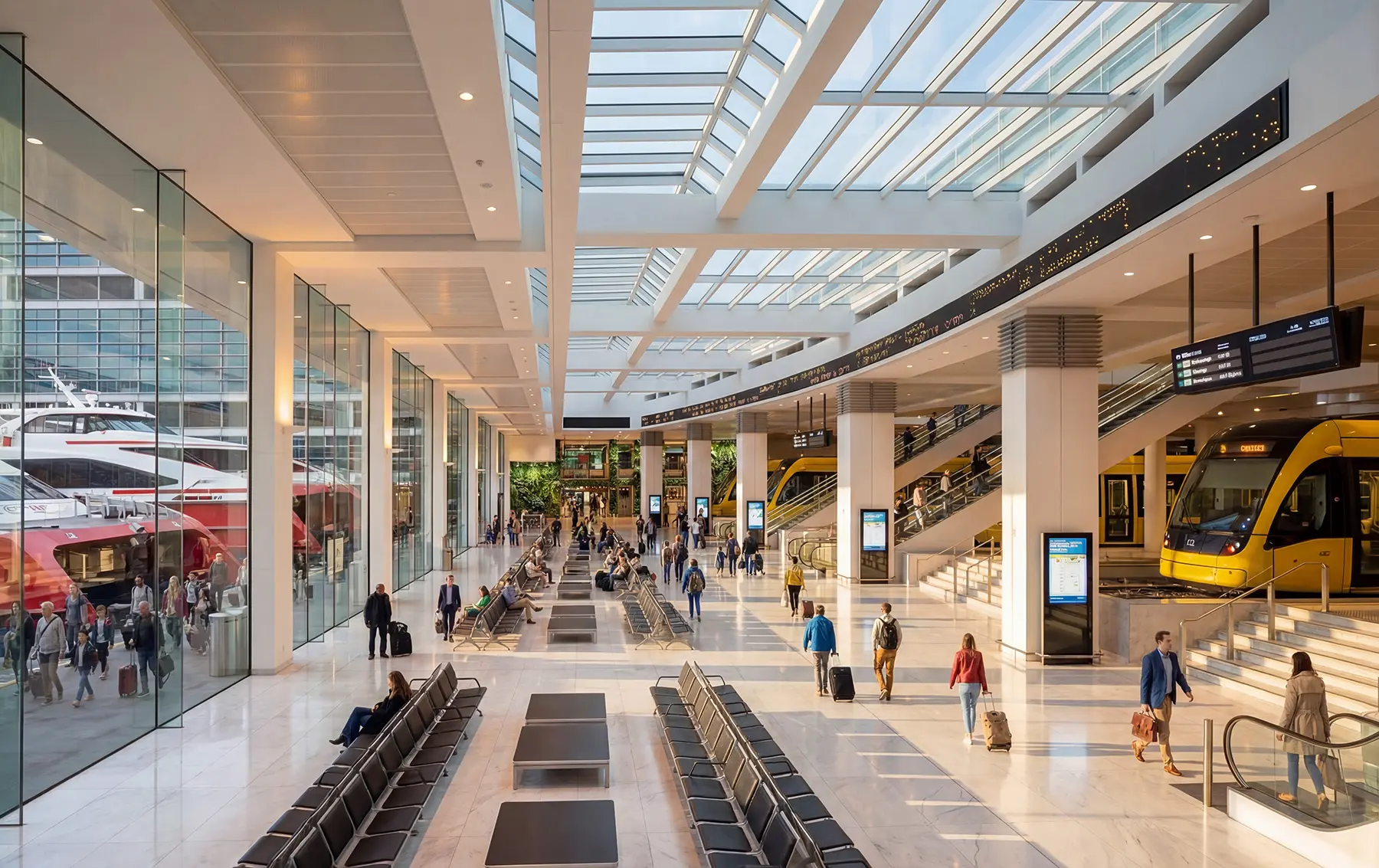
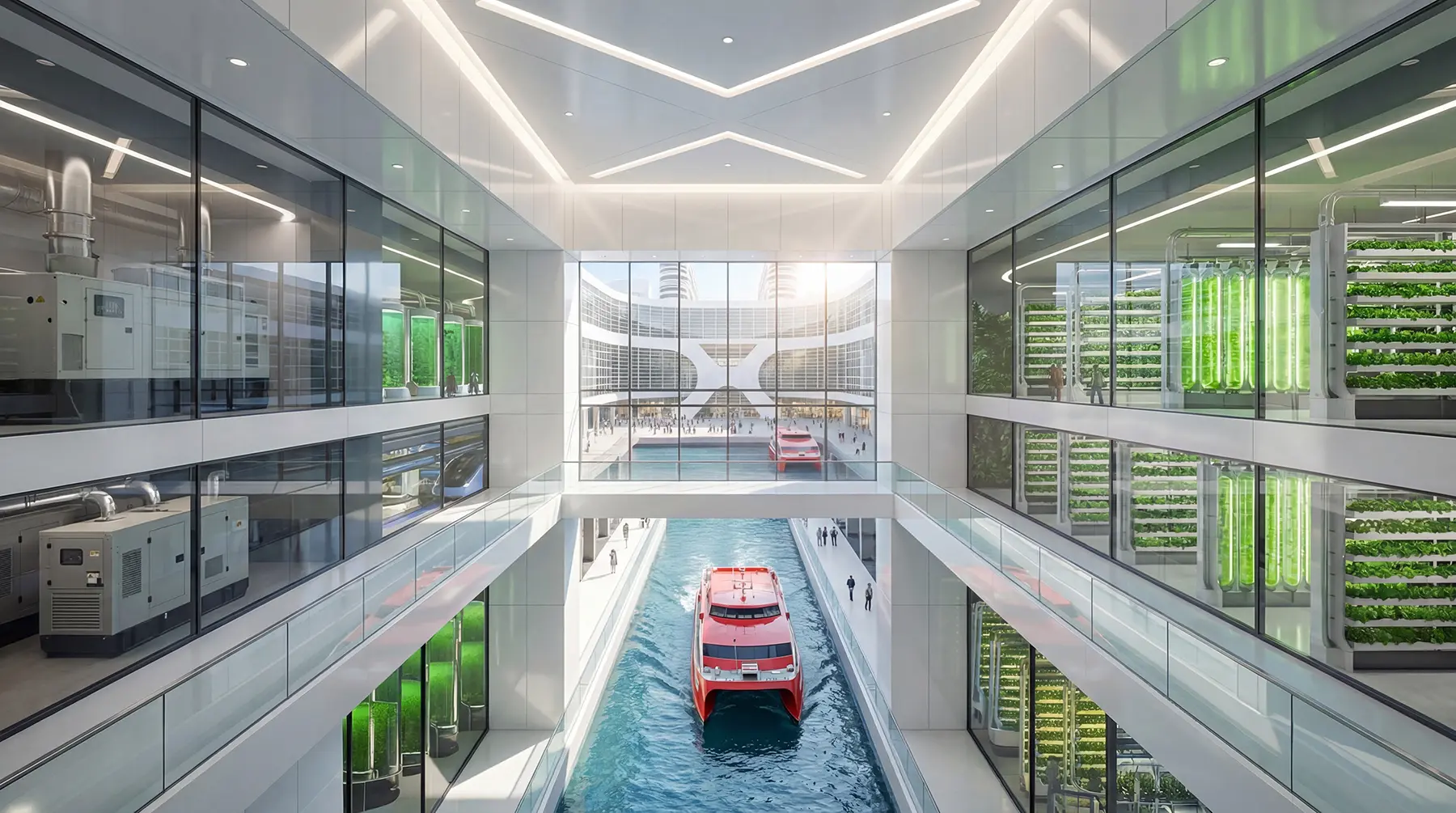
Internal transit supports longer movement across the city where needed. Shared transit systems, service routes, and logistical circulation are integrated carefully to ensure efficiency without disrupting residential or public life. The movement of people, goods, and services is coordinated but deliberately separated where appropriate.
Accessibility is integral to the city’s design. Circulation routes, transit systems, and public spaces are designed to accommodate residents of all ages and mobility levels, allowing full participation in city life over time without barriers.
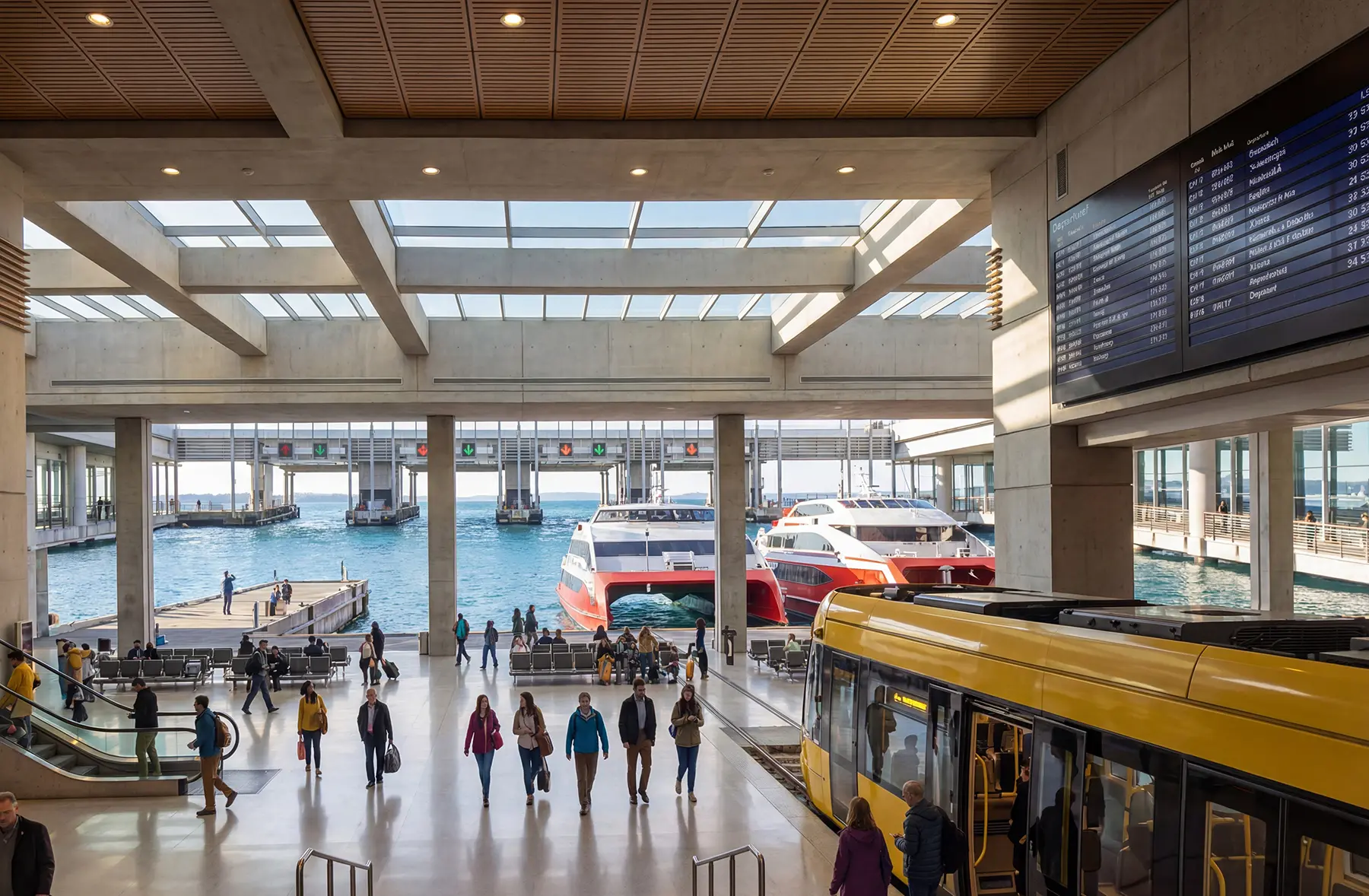
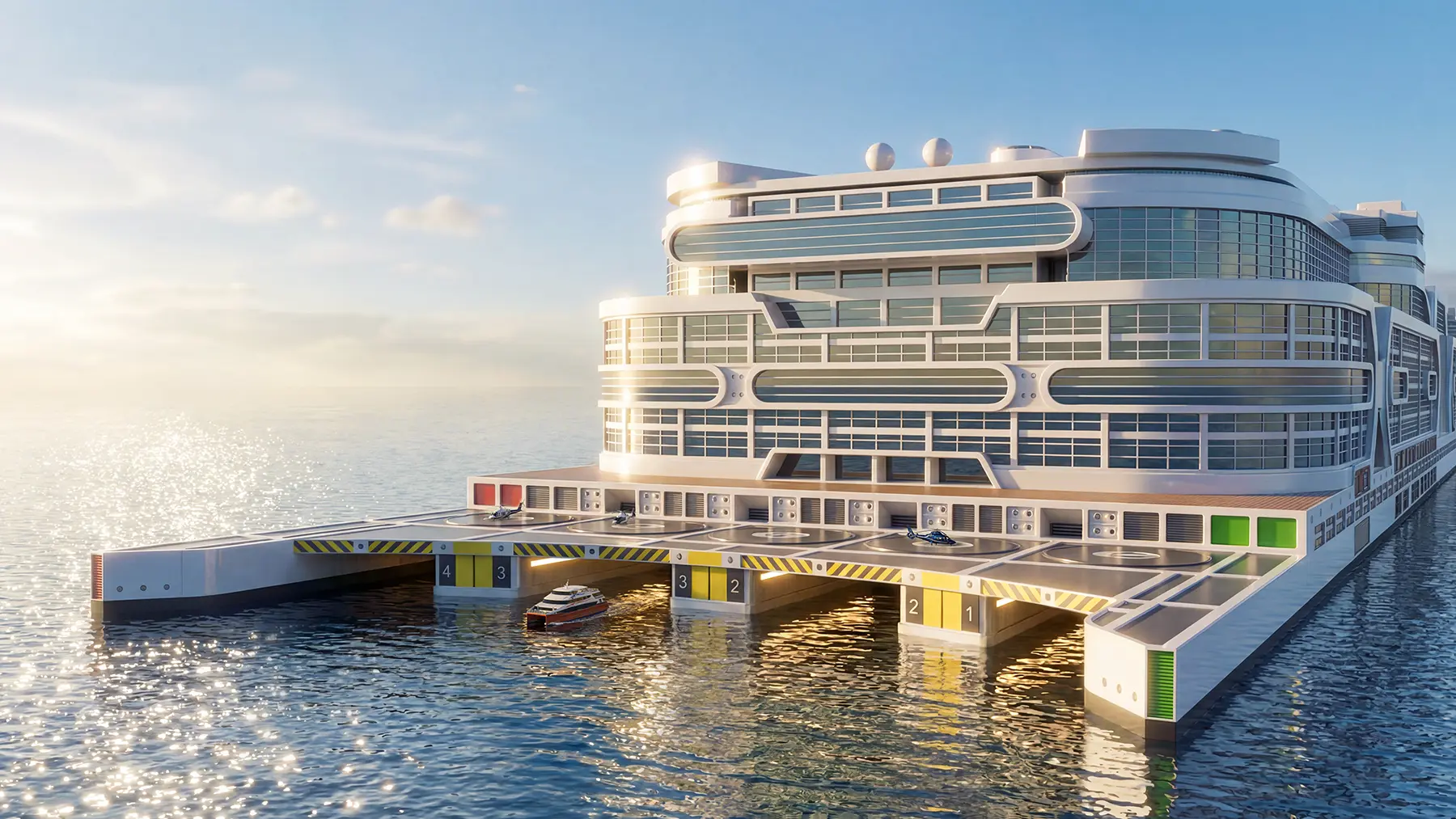
Movement beyond the city is treated as a transition rather than a disruption. Port interfaces and external access points are designed to connect the Freedom Ship to surrounding regions while preserving the continuity of life onboard. Residents can engage with ports and destinations without the city itself becoming transient.
Mobility aboard the Freedom Ship is meant to feel intuitive and unremarkable. It supports daily life quietly and reliably, allowing the city to function as a cohesive whole while moving continuously through the world.